

Last updated: November 13, 2026
Restylane under eye filler adds volume to hollow areas beneath the eyes. At La Belle Vie MedSpa, we offer Restylane injections in Seattle for under-eye hollows.
What is Restylane under eye filler?
Restylane under eye filler is a hyaluronic acid treatment used to add volume to hollow tear troughs. The U.S. Food and Drug Administration (FDA) approves Restylane Eyelight to improve infraorbital hollowing in adults aged 21 and older.
Which Restylane product is FDA-approved for under-eye hollows?
Restylane Eyelight has an FDA-approved indication for improving the appearance of depressed, sunken or hollow areas between the lower eyelid and cheekbone. Our Restylane service includes under-eye treatment, but our published service information does not name Eyelight or establish that we offer it. Ask for the exact product name before making a treatment decision.
How does Restylane work for under-eye hollows and dark circles?
Injected Restylane hyaluronic acid gel adds volume to a hollow tear trough, creating a smoother transition between the lower eyelid and cheek. Because a deeper hollow can cast a shadow, reducing the hollow may soften that shadow as well.
How does Restylane filler work?
Hyaluronic acid helps skin retain moisture, while the injected gel supports the contour beneath the skin. The aim is a natural-looking transition, not a completely flat under-eye area. Checking the nearby cheek as well as the tear trough helps distinguish a true hollow from other lower-eyelid changes.
Can under-eye filler treat every kind of dark circle or eye bag?
No. Pigmentation or visible blood vessels can make the under-eye area look dark even when hollowing is minimal. Likewise, a protruding lower-eyelid fat pad can create an eye bag that added volume will not remove. Filler may reduce the shadow beside a bag without correcting the protruding tissue itself; it should not be expected to erase every dark circle, wrinkle or eye bag. If a protruding bag is your main concern, ask whether a surgical evaluation would be more useful than filler; the American Academy of Ophthalmology notes that some patients choose surgery instead of lower-eyelid filler.
Who is a good candidate for Restylane under the eyes?
A person with a noticeable tear-trough hollow may be a candidate for Restylane under the eyes, but appearance alone cannot determine suitability. An in-person assessment should examine volume loss, lower-eyelid skin, puffiness, pigmentation and prior treatment.
What type of filler is best for under eyes?
No filler is best for everyone. Product selection depends on what is causing the concern, lower-eyelid anatomy and the potential for swelling. Eyelight has an FDA-approved indication for under-eye hollowing, but it is not appropriate for every hollow. Other clinicians may consider hyaluronic acid fillers such as Belotero near the eyes; Eyelight’s approval does not extend to those products. Ask which exact product and placement are proposed and whether that use is FDA-approved or off-label. Our under-eye filler safety guide offers more context for weighing treatment expectations.
How does Eyelight differ from other Restylane fillers?
Restylane Eyelight differs from other products in the family because its FDA indication specifically includes under-eye hollowing. Our listed Restylane products include Lyft for cheek volume and Contour for cheek and midface fullness.
The distinction is the product’s approved treatment area, not simply whether an injector uses a Restylane filler:
| Product | Relevant treatment area | What to clarify |
|---|---|---|
| Restylane Eyelight | FDA-approved for infraorbital hollowing | Whether Eyelight is the product proposed and whether it is available |
| Restylane Contour | Cheeks and midface, as described in the FDA’s Contour product information | Whether a proposed placement is within the product’s approved uses |
| Restylane Lyft | Cheeks and hands in our Restylane service information | Which area the injector proposes to treat and why |
If a proposed under-eye use falls outside the selected product’s FDA-approved indication, that use is off-label. Ask the injector to explain the exact formulation, placement plan and labeling rather than assuming that approval for one Restylane product covers the whole family.
What happens during a Restylane under-eye treatment?
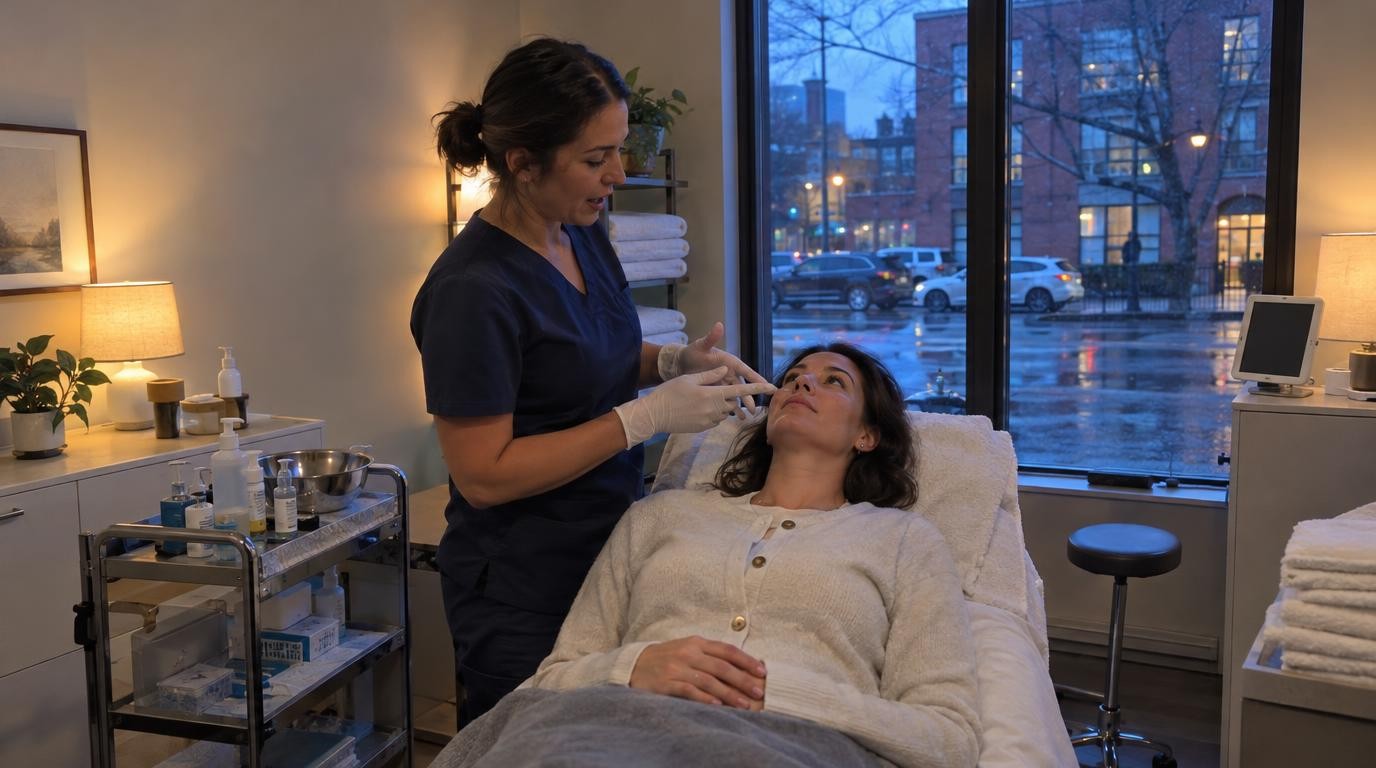
We begin by assessing whether a tear-trough hollow or another change is causing your concern. If filler is appropriate, an injector uses a thin needle to place the selected hyaluronic acid gel beneath the eyes, between the lower eyelid and cheekbone.
A typical discussion and treatment sequence includes:
- Reviewing the appearance that concerns you, relevant health history and any previous under-eye filler.
- Examining whether hollowing, puffiness or discoloration is driving the appearance.
- Confirming the product name, proposed injection area, expected benefit and limitations.
- Administering the filler and giving instructions for monitoring the treated area afterward.
At La Belle Vie MedSpa, Restylane injections generally take less than 30 minutes. The assessment and post-treatment discussion may add to your total appointment time.
What should you ask your injector before treatment?
- What is the exact product name, and is the proposed under-eye placement FDA-approved or off-label?
- Is my concern primarily a hollow, or could pigmentation or protruding tissue be responsible?
- What experience do you have assessing and treating the under-eye area?
- What result is realistic for my anatomy, and what is the follow-up plan?
How long does Restylane under eyes last?
Restylane under-eye results vary with the product, the treatment plan and the patient. In an FDA-described clinical study of Eyelight involving 333 participants, one or two treatments with multiple injections were needed for the best outcome, and results may last up to 12 months. Those findings are specific to Eyelight, not every Restylane under-eye treatment. An article on the American Board of Cosmetic Surgery website reports that 87% of patients had reduced under-eye hollowness at 3 months in an Eyelight clinical study.
What recovery can you expect after under-eye filler?
Pinpoint bleeding, tenderness, swelling and bruising can occur after Restylane injections. In our general Restylane guidance, these symptoms typically last less than 72 hours; under-eye recovery may differ, and swelling can affect how the result looks initially. Swelling or bruising may be visible even if you do not need time off from your usual activities.
What are the risks of Restylane under-eye filler, and who should avoid it?
Restylane under-eye filler may cause redness, swelling, itching, bruising, pain, tenderness, or an uneven appearance, including injection-site lumps or bumps. The American Board of Cosmetic Surgery article reports that 87% of patients experienced no adverse side effects after Eyelight treatment in a clinical study. A rare but serious complication is injection into a blood vessel, which can cause tissue injury or vision loss.
If you are under 21, Eyelight is not FDA-approved for your age group. A known allergy to the proposed filler or an ingredient, such as the lidocaine in Eyelight, is a reason not to receive that product. Postpone injection if you have an active infection at or near the treatment site. Tell your injector about prior filler, previous reactions and relevant health conditions so they can check the proposed product’s labeling against your medical history.
Reactions are not always immediate. A systematic review of delayed inflammatory reactions to hyaluronic acid fillers estimated about one event for every 2000 patients with 1 year of follow-up. These rare reactions can include nodules, redness, swelling and firmness. The estimate concerns facial hyaluronic acid fillers generally, not Eyelight specifically.
Seek urgent medical evaluation for any vision change, severe or worsening pain, or unusual whitening or darkening of the skin after an injection. Discuss your own risks and suitability with a licensed clinician before proceeding.
Frequently Asked Questions
Can Restylane under-eye filler be dissolved if I do not like the result?
Yes. Restylane is a hyaluronic acid filler, and hyaluronic acid fillers are reversible, according to Cleveland Clinic. Dissolving filler requires a clinical assessment and an injection of hyaluronidase; it is not an at-home fix. Ask your injector what correction options are appropriate for the product and result you have.
Do Restylane under-eye injections hurt?
You may feel discomfort during under-eye injections, even if the proposed filler contains a numbing agent. FDA information on Restylane Eyelight states that it contains 0.3% lidocaine to reduce pain on injection.
Can Restylane under-eye filler treat crow’s feet?
Under-eye filler is not the same treatment as one for crow’s feet. Restylane Eyelight is approved for hollows between the lower eyelid and cheekbone, not wrinkles at the outer corners of the eyes. Cleveland Clinic describes Botox as a treatment for crow’s feet. Botox relaxes the muscles that form crow’s feet, while Eyelight adds volume beneath the lower eyelid.
Can I get Restylane under-eye filler if I have had filler there before?
Possibly. Tell us which product you received, when you received it and whether you had persistent swelling, lumps or other complications. An injector can assess the existing filler before deciding whether more filler, a different approach or no treatment makes sense.
When should I ask about swelling or bumps after under-eye filler?
Contact your injector if swelling or bumps worsen, first appear after initial recovery, or are not starting to improve after 72 hours. In a review of facial hyaluronic acid fillers, the median onset of rare delayed inflammatory reactions was 3 months (range, 2 weeks to 12 years); this is not an Eyelight-specific finding. Seek urgent medical evaluation for a vision change, severe pain, or unusual skin color changes.
Is Restylane Skinbooster Vital the same as Restylane Eyelight?
No. The products appear in research for different concerns: Restylane Eyelight’s FDA approval covers under-eye hollowing, while a study of Skinbooster Vital examined its use with botulinum toxin for wrinkles at the outer corners of the eyes. That study does not establish Skinbooster Vital as an approved tear-trough filler.
How can you choose an under-eye filler consultation in Seattle?
Look for an injector with relevant medical training, knowledge of lower-eyelid anatomy and experience assessing tear troughs. A useful consultation should identify what is causing your concern, name the exact proposed product and injection area, and explain the plan for complications and follow-up.
If hollowing is your main concern, contact La Belle Vie MedSpa in Seattle, Washington to schedule a consultation. We can assess your under-eye area, explain which Restylane product we use for a proposed treatment and help you decide whether filler fits your goals.
This information is general and is not medical advice. Talk to a licensed clinician about your own situation before making a treatment decision.
