

Last updated: October 23, 2026
PRP for under eyes uses platelet-rich plasma prepared from your own blood to support skin rejuvenation. It may help some concerns involving fine lines, crepey texture, or dark circles, but the cause of the discoloration matters: PRP is unlikely to fill a hollow or remove a prominent under-eye bag. Learn more about PRP injections in Seattle at La Belle Vie MedSpa.
What Is PRP for Under Eyes, and What Can It Help?
Under-eye PRP injections place platelet-rich plasma in a targeted area to support changes in skin quality. Fine lines and crepey-looking texture may be more suitable concerns than deep hollows or prominent bags. Dark circles require a closer look because pigmentation, thin skin, and shadows can call for different approaches.
At La Belle Vie MedSpa, our PRP injections for skin and hair rejuvenation are intended to support collagen production and improve skin texture. Our team will confirm whether under-eye injections are available and appropriate before booking treatment.
Is PRP good for under eye dark circles?
PRP for dark circles may be worth discussing when skin quality or pigmentation contributes to their appearance, but not every dark circle has the same cause. Cleveland Clinic’s guide to dark circles describes several possible causes and includes PRP among treatments that may strengthen skin around the eyes. A shadow cast by a hollow calls for a different assessment than discoloration in the skin itself.
Can PRP help fine lines, puffiness, or hollows?
PRP for fine lines aims to improve skin quality rather than add volume. Johns Hopkins Medicine’s guidance on under-eye bags notes that lower-eyelid PRP may improve skin texture and fine wrinkles. For a hollow caused by mild volume loss, appropriately assessed hyaluronic acid tear-trough filler may camouflage the hollow by adding volume; PRP does not fill it. True bags are a different concern: an article on the American Society of Plastic Surgeons’ website notes the limits of nonsurgical treatment and identifies lower-lid blepharoplasty, with or without fat removal or repositioning, as an option to discuss for true bags. Surgery is not necessary or suitable for everyone. Patients chiefly bothered by lost volume can also read our guide to EZ Gel for under-eye hollows before comparing options.
How Is PRP Prepared for Skin Rejuvenation?
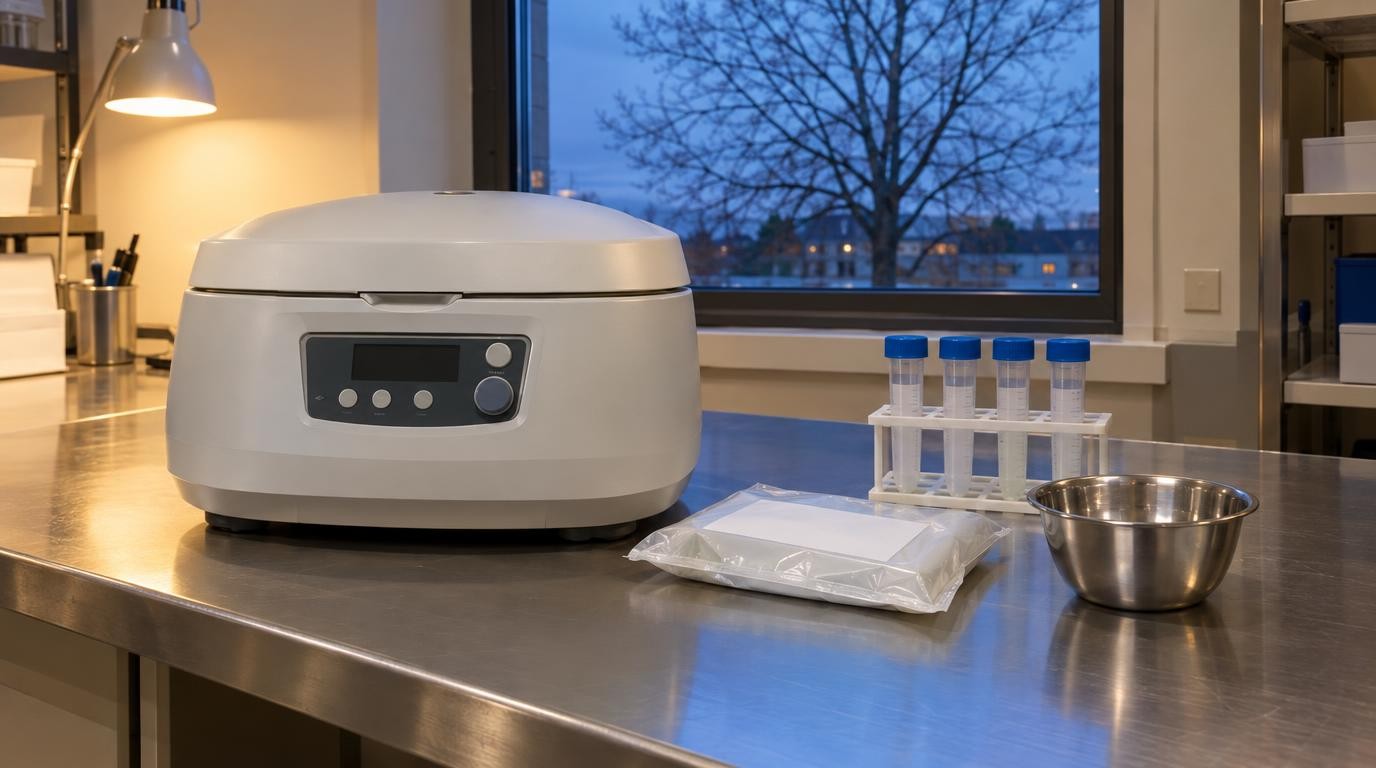
Platelet-rich plasma contains platelets concentrated in a small volume of plasma. American Academy of Ophthalmology EyeWiki describes centrifugation as a way to prepare it from a patient’s blood. Platelets release growth factors involved in tissue repair. At La Belle Vie MedSpa, the skin-rejuvenation goals include improved texture and collagen support, not a guaranteed under-eye result.
Growth factors provide a reason to investigate PRP for skin rejuvenation, but preparation methods and individual responses vary. Concentrating platelets does not, by itself, establish how much someone’s under-eye appearance will change.
Who Should Consider a Consultation About Under-Eye PRP?
Adults seeking a nonsurgical approach to fine lines, crepey-looking skin, or certain dark circles may consider asking about under-eye PRP. A useful assessment identifies whether the visible concern comes from skin quality, pigment, puffiness, or a structural shadow.
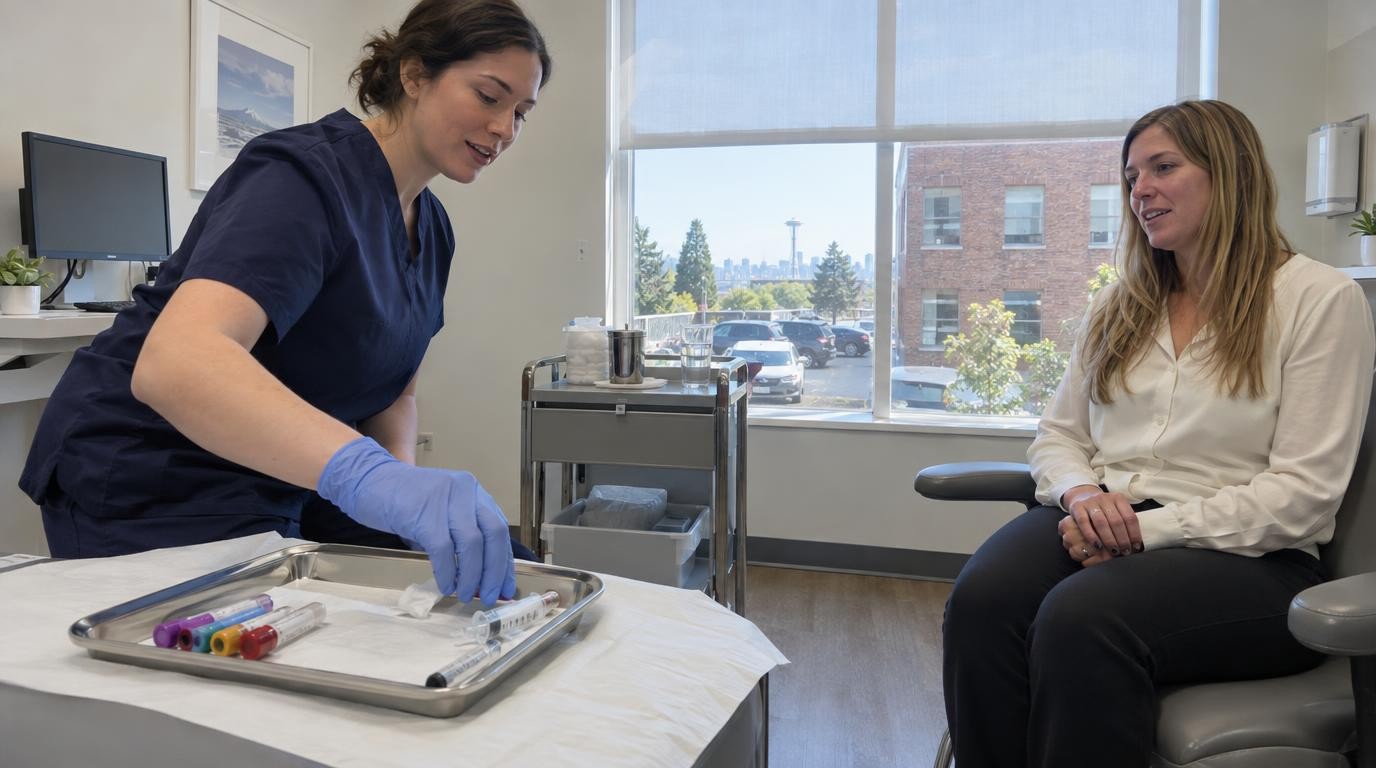
Someone with delicate-looking, finely lined skin may have a different treatment discussion from someone whose main concern is a deep tear trough. Patients coming from Mercer Island can bring photographs or a clear description of what changes throughout the day to help explain what bothers them.
What Does the 2025 Review Say About PRP Versus PRF Around the Eyes?
A 2025 systematic review of PRP and platelet-rich fibrin, or PRF, found promising but different patterns of under-eye benefit without establishing that either treatment is superior overall. The review synthesized existing periorbital studies; it was not a new clinical trial.
The 2025 systematic review in the Journal of Cosmetic Dermatology examined preparation methods, injection techniques, treatment frequency, outcomes, and adverse effects.
The review’s main comparisons are summarized below.
| Question | What the review found | What it means for a patient |
|---|---|---|
| How much evidence was included? | The 2025 review included 14 studies. | Differences in treatment protocols limit how confidently the findings apply to an individual plan. |
| Which concerns showed promise? | PRF was associated with improvements in texture, wrinkles, and crepiness; PRP had stronger evidence for hyperpigmentation. | The cause of an under-eye concern matters when discussing either option. |
| Is one option better or longer-lasting? | The review did not establish overall superiority. PRF improvements often diminished by 6 months, while some PRP pigmentation outcomes persisted at similar intervals. | Those observations do not guarantee how long a personal result will last. |
| What did patients report about safety and satisfaction? | The review reported high patient satisfaction and only mild, temporary adverse effects across the included studies. | These reports do not provide a dependable estimate of your individual risk or rule out less common complications. |
How Are PRP and PRF Different for the Under-Eye Area?
PRP is platelet-rich plasma; PRF is a related platelet concentrate that includes a fibrin structure. Preparation and composition differ, so the products should not be treated as equivalent injections. Our PRF versus PRP guide provides more background on the distinction.
What Happens During a PRP Appointment?
During a PRP appointment, we draw a small blood sample, process it to concentrate the platelets, and inject the prepared plasma into the areas identified in your treatment plan. Our general PRP appointments typically take 30–60 minutes; that estimate is not specific to under-eye treatment.
What Is Recovery Like After PRP Near the Eyes?
Under-eye PRP recovery can include temporary redness or swelling at injection sites. These effects generally subside quickly after PRP treatment. The American Academy of Dermatology’s PRP overview says pain, bruising, and swelling tend to go away within a few days, although recovery near the eyes can vary.
The under-eye area is delicate, and visible changes immediately after an injection may reflect the procedure rather than a skin-rejuvenation result. Contact our team if redness or swelling worsens instead of beginning to settle.
When Might Under-Eye PRP Results Become Noticeable?
The 2025 review does not establish when a patient should first notice an under-eye PRP result. Any collagen-related change, if it occurs, develops over time rather than providing an immediate, filler-like correction of a hollow. The review’s observations at around six months concern how long some results persisted, not when patients first noticed them. We recommend a series of PRP treatments for optimal skin-rejuvenation results; the ideal number and spacing of under-eye sessions have not been established.
What Are the Risks of Under-Eye PRP, and Who Should Avoid It?
Under-eye PRP can cause temporary redness and swelling, and injections or blood collection may also cause discomfort or bruising. Johns Hopkins Medicine’s PRP injection overview lists bleeding and tissue damage as less common risks. People with an active infection near the area, relevant blood or platelet conditions, or medication-related bleeding concerns need individual screening before an eye-area injection is considered.
Cleveland Clinic’s PRP injection overview says there is a remote chance of contamination if blood is not kept sterile during preparation. It also recommends reviewing blood conditions and medications before treatment.
What is the downside of PRP?
The main downside is uncertainty: PRP may not improve the feature that bothers you, even when treatment is performed as planned. Discuss your health history and medications with your own clinician rather than stopping a medication on your own. Seek urgent medical care for a new vision change, severe eye pain, or rapidly worsening swelling after an eye-area procedure.
Frequently Asked Questions
What do Koreans do for dark circles?
We would not assume there is one treatment Koreans use as a group. What may help depends on whether the darkness comes from pigment, thin skin, shadows from hollows, allergies, or another cause. An assessment of the cause is more useful than choosing a treatment based on a trend or a country.
Can allergies cause dark circles that PRP will not fix?
Yes – allergies can cause under-eye darkness, sometimes called allergic shiners. PRP is not a treatment for the underlying allergy. If your circles persist for more than a few weeks or appear seasonally, Cleveland Clinic’s guide to allergic shiners says an evaluation may include allergy testing.
Can PRP be combined with microneedling under the eyes?
Yes—an article on the American Society of Plastic Surgeons’ website describes microinfusion microneedling with PRP as an approach for crepey under-eye skin or mild laxity. This combination is distinct from a standalone PRP injection; a clinician can explain the technique and assess whether it suits your under-eye skin. For more on a PRP facial, read about its potential effects on skin texture and wrinkles.
How many under-eye PRP sessions will I need?
There is no established session count that works for everyone. We recommend a series for PRP skin rejuvenation, but the ideal number and spacing of under-eye sessions remain unanswered questions.
Can I get under-eye PRP if I have hepatitis C or HIV?
PRP skin rejuvenation is not recommended for people with hepatitis C or HIV, according to the American Academy of Dermatology. It also identifies any type of blood cancer, cardiovascular disease requiring a blood thinner, and skin cancer in the treatment area as reasons PRP skin rejuvenation is not recommended. Tell your clinician about your medical history before considering an eye-area injection.
What can I try for dark circles if I do not want under-eye injections?
Noninjection options depend on what causes the darkness. Sun protection, appropriate skin care, adequate sleep, hydration, and keeping eyelid skin moisturized are reasonable starting points, though they will not resolve every cause. Cleveland Clinic lists topical creams or lightening agents for pigmentation, chemical peels, and laser treatments among possible approaches. A clinician can help distinguish skin discoloration from shadows caused by hollows, which may not respond to treatments aimed at pigment.
Is under-eye PRP the same as PRP eye drops?
No – under-eye PRP is injected into tissue for cosmetic skin concerns, while PRP eye drops are applied to the eye for certain ocular conditions. American Academy of Ophthalmology EyeWiki discusses blood-derived drops for eye-surface conditions and injections into the tear gland for severe dry eye; neither is a cosmetic injection beneath the eyes. Research about PRP drops should not be taken as evidence that cosmetic under-eye injections will work.
How Can Mercer Island Patients Decide Whether to Ask About PRP?
- Ask what is causing the visible darkness or shadow.
- Ask which change PRP could realistically address and which concerns may remain.
- Ask whether PRF or another approach better matches the treatment goal.
- Ask how a proposed series would be reassessed and what eye-area risks apply.
If you are considering PRP for under eyes, contact La Belle Vie MedSpa in Seattle for a consultation.
This information is general and is not medical advice. Talk to a licensed clinician about your own situation before making a treatment decision.
