

Last updated: November 22, 2026
A PRP facial uses platelets concentrated from your own blood to support gradual improvements in skin texture and the appearance of fine lines. The term can mean different procedures: at La Belle Vie MedSpa in Seattle, Washington, we offer targeted PRP injections for skin, and PRP may also be paired with microneedling.
What does a PRP facial do?
PRP injections may modestly improve skin texture and the appearance of fine lines, while platelet-derived growth factors may support collagen production. We also discuss PRP with patients concerned about dullness or facial acne scars, although scar improvement is less predictable. At La Belle Vie MedSpa, the primary approach is targeted injections; elsewhere, a PRP facial may refer to microneedling paired with PRP.
What is platelet-rich plasma?
Platelet-rich plasma, or PRP, is the portion of processed blood that contains concentrated platelets. Platelets release growth factors involved in tissue repair. For skin treatment, we draw a small blood sample, prepare the PRP, and deliver it to selected areas. You can find the treatment details on our PRP injections for skin and hair service page.
Is a PRP facial the same as a vampire facial?
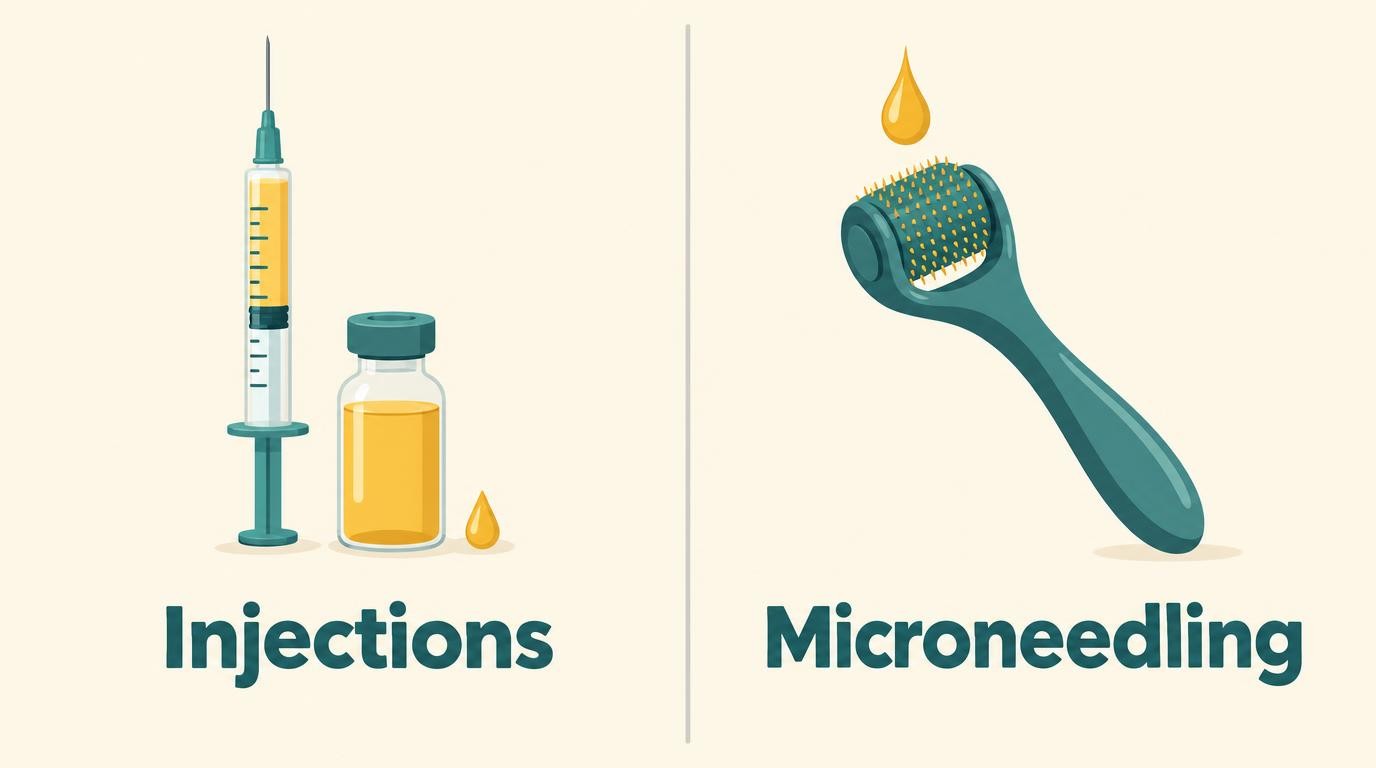
Not necessarily. An article on the American Society of Plastic Surgeons’ website describes a “vampire facial” as microneedling followed by topical PRP application. Targeted PRP injections are a different delivery method. Because the nickname is used loosely, ask which procedure is included before assuming the treatments are identical.
Does PRP really work for the face?
PRP may produce modest improvements in facial skin appearance, with the strongest support for texture. Fine lines may improve, but dramatic lifting and replacement of lost facial volume are not established outcomes of PRP injections. Differences in PRP preparation, application, and outcome measurement make individual results difficult to predict.
What does the recent research say about wrinkles and skin texture?
Research offers a reason to consider PRP, but not a guarantee of smoother skin. The findings most relevant to facial texture and wrinkles are summarized here:
| Source | What the research found |
|---|---|
| A 2025 systematic review of facial rejuvenation | The review included nine clinical trials and two observational studies; four studies reported improvement in wrinkles and skin texture. Application techniques and doses differed. |
| A 2020 systematic review of PRP for skin aging | Across 24 studies involving 480 patients receiving PRP, the authors found that injections may offer modest benefits. They judged the evidence most convincing for facial skin texture. Improvement was typically less than 50% in the studies reviewed, which is not a prediction of an individual patient’s result. The authors said the persistence of effects was unknown. |
A 2021 systematic appraisal of facial rejuvenation evidence found the clinical evidence very limited; its included studies assessed PRP both alone and alongside other treatments. A separate 2023 systematic review of PRP injections reported promising findings but called for stronger controlled trials. These distinctions matter when interpreting a claim about PRP injections alone.
Can PRP lift sagging skin or replace lost volume?
PRP is better understood as a possible skin-quality treatment than as a way to restore substantial volume or lift sagging tissue. Skin that looks smoother or more radiant can still have the same underlying contours.
How is a PRP facial performed at La Belle Vie MedSpa?
Our PRP skin appointments typically last 30–60 minutes, and microneedling is not automatically included with PRP injections.
What happens during the blood draw and PRP preparation?
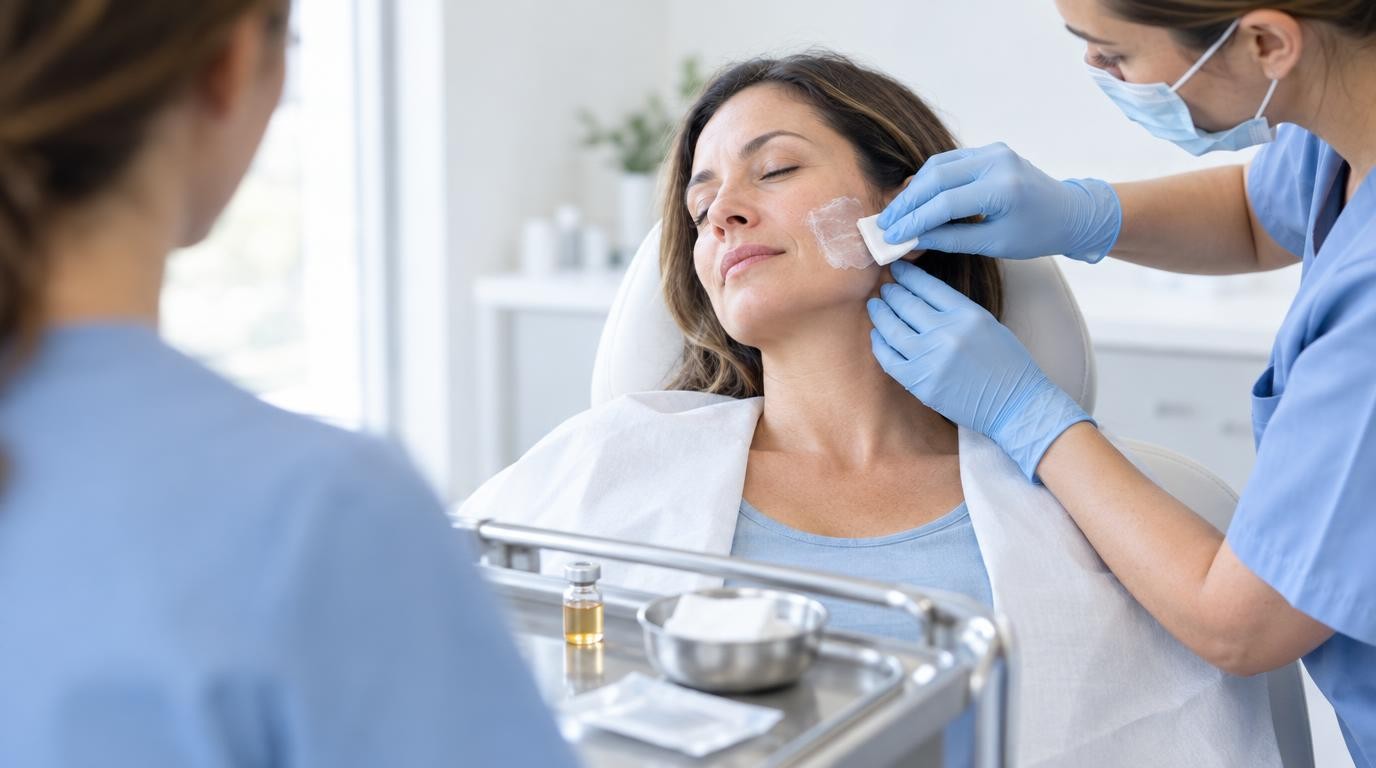
The treatment follows a straightforward sequence:
- We draw a small amount of your blood.
- PRP preparation typically involves spinning the sample in a centrifuge to separate the blood into layers and concentrate the platelet-rich portion.
- We inject the prepared PRP into the areas selected for your skin goals.
What do PRP injections feel like?
We apply topical numbing cream before treatment. Most patients feel mild pressure or a quick pinch during the injections. Sensation can differ by treatment area and from person to person.
How many PRP facial sessions are needed?
At La Belle Vie MedSpa, most patients begin with three PRP sessions spaced about four to six weeks apart. That schedule is a starting plan, not a promise of a particular result; the recommended series depends on your skin concerns.
How long does it take to notice skin changes?
Skin improvements usually become noticeable over several weeks, rather than immediately. The amount of visible improvement varies, particularly when the concern is a deeper crease or more pronounced scarring.
Will PRP facial results need maintenance?
At La Belle Vie MedSpa, maintenance sessions once or twice a year may be recommended after an initial series. The American Academy of Dermatology says PRP skin results can last as long as 18 months; that is a possibility, not a typical duration. A 2020 systematic review of PRP for skin aging found that how long improvements persist is not well established. Our guide to PRP for under-eye concerns offers a closer look at goals in that specific area.
What is recovery like after a PRP facial?
Recovery after PRP injections may involve temporary redness, swelling, tenderness, or bruising where the injections were placed. At La Belle Vie MedSpa, redness or swelling generally subsides quickly. An injection-only visit should not be assigned the same recovery schedule as a microneedling procedure, which treats the skin differently.
Who is a good candidate for a PRP facial?
PRP for skin may suit adults who want to address fine lines, facial acne scars, uneven texture, or dullness using their own platelets. Texture is the best-supported potential benefit, while improvement in other concerns is less predictable. Someone seeking correction of substantial sagging or lost volume may need a different approach.
Can PRP help with acne scars and uneven texture?
Improvement is possible, especially when uneven texture is the main concern, but PRP cannot be expected to erase facial acne scars. Scar type, depth, and the treatment method all affect what may be achievable. Evidence about PRP combined with microneedling should not be presented as proof that injections alone will produce the same scar result.
What are the risks of a PRP facial, and who should avoid it?
PRP uses your own blood, so allergic-reaction risk is very low. Infection is possible whenever an injection punctures the skin. A 2025 systematic review of facial PRP described reported adverse effects as rare, including injection-related bruising and swelling; it did not establish a rate for every reaction or for treatment at our clinic. At La Belle Vie MedSpa, PRP is not recommended during pregnancy or for people with blood or platelet disorders, active infections, certain cancers—including blood cancer or skin cancer in the treatment area—or blood thinner use that cannot be paused.
Can PRP cause an allergic reaction?
An allergic reaction to the PRP itself is unlikely because the material comes from your own blood. That does not make the procedure free of side effects: injection-site reactions remain possible. Seek prompt medical care for fever, spreading redness, pus, or worsening pain after treatment; get emergency care for breathing difficulty or swelling of the face or throat.
Which medical conditions should I discuss before PRP?
Tell your own clinician about pregnancy, blood or platelet disorders, active infections, certain cancers, and any blood thinners you take. We review medical history to assess whether PRP is appropriate. Do not stop or pause a prescribed blood thinner on your own.
Is PRP better than microneedling?
Neither PRP injections nor microneedling is universally better. PRP injections place concentrated platelets into targeted areas and may modestly improve skin texture. Microneedling uses small skin punctures to stimulate a repair response; the American Academy of Dermatology’s microneedling guidance says it can diminish acne scars, uneven texture and tone, wrinkles, and fine lines. Which approach fits you depends on your skin concern and whether each procedure is appropriate for you. The treatments can also be combined, but evidence for a combination procedure does not establish that PRP injections alone will give the same outcome.
Can PRP injections be combined with microneedling?
Yes. At La Belle Vie MedSpa, we may combine PRP with microneedling when that approach fits your skin goals. Microneedling has screening considerations beyond those for PRP injections alone: the American Academy of Dermatology advises against it if you heal slowly or poorly, have a weakened immune system, are receiving radiation treatment, or are being treated for skin cancer in the area. It advises waiting if you have a tan or recent sun exposure, a skin infection, or painful, pus-filled, or deep pimples. Our guide to microneedling for skin rejuvenation in Seattle provides more detail about the separate procedure.
Frequently Asked Questions
How much blood is drawn for a PRP facial?
According to the American Academy of Dermatology, a typical PRP facial begins with about 2 to 4 tablespoons of blood drawn from the arm; the amount drawn for your treatment may vary. At La Belle Vie MedSpa, we process the sample to concentrate platelets before injecting them into targeted areas.
Can PRP be paired with filler for immediate results?
Yes. Some dermatologists pair PRP with a dermal filler. The American Academy of Dermatology explains that the filler provides an immediate change, while PRP skin improvements develop gradually.
Can PRP injections improve pigmentation around the eyes?
Possibly. A 2020 systematic review of PRP for skin aging found that pigmentation and fine lines around the eyes may benefit, but individual results are uncertain.
Is a PRP facial recommended if I have hepatitis C or HIV?
No. The American Academy of Dermatology advises against PRP skin rejuvenation for people with hepatitis C or HIV/AIDS because these conditions can affect platelets and the expected results. Tell us about your medical history before treatment so we can review whether PRP is appropriate for you.
Can I combine PRP with microneedling if I get keloid scars?
Microneedling is not recommended if you have or have had a keloid, according to the American Academy of Dermatology. Adding PRP does not remove that concern. At La Belle Vie MedSpa, PRP injections do not automatically include microneedling, so tell us about any history of raised scars when we discuss your options.
Can I get a PRP facial with microneedling while taking isotretinoin?
Microneedling should be postponed if you are taking or have taken isotretinoin, according to the American Academy of Dermatology. PRP injections alone are a different procedure, but that does not establish whether they are appropriate for you. Tell us about current or past isotretinoin use so we can assess your options.
Can PRP facial injections cause dryness or small bumps?
Yes, although these reactions appear uncommon. A 2025 systematic review of facial PRP reported occasional small bumps, scaling, and dryness at injection sites.
Is a PRP facial right for your skin goals in Seattle?
A PRP facial may be worth considering if your priority is gradual, potentially modest improvement in skin texture rather than dramatic lifting or volume replacement.
If you are considering PRP for fine lines, dull skin, or uneven texture, contact La Belle Vie MedSpa in Seattle, Washington, for a consultation. Our team, under the medical direction of Dr. Tony Mangubat, MD, a board-certified cosmetic surgeon, can discuss whether PRP injections alone or a combination with microneedling fits your goals.
This information is general and is not medical advice. Talk to a licensed clinician about your own situation before making a treatment decision.
About the doctors at La Belle Vie MedSpa
Dr. Tony Mangubat, MD – Board-certified cosmetic surgeon, chief surgeon and medical director since 1987.
Dr. Lena Weinman – Cosmetic surgeon (cosmetic surgery fellowship with Dr. Mangubat, 2024); board-certified by the American Osteopathic Board of Obstetrics and Gynecology.
