

Last updated: October 25, 2026
To get rid of age spots safely, first confirm that the marks are benign, then protect your skin from the sun and choose between gradual topical care and an in-office procedure. IPL photofacial can fade suitable sun spots, but the right treatment depends on the diagnosis, skin tone, and amount of recovery you are comfortable with.
How Do You Get Rid of Age Spots Safely?
Before treating a suspected age spot, have a board-certified dermatologist confirm what it is. Once a spot is confirmed as benign, creams and lotions generally take weeks or months of regular use; procedures tend to work faster but have a higher risk of side effects.
The American Academy of Dermatology cautions that a mark resembling an age spot may be skin cancer; treating it as a cosmetic spot could give the cancer time to grow or spread. To help prevent further sun damage, seek shade, cover exposed skin, and apply broad-spectrum sunscreen to skin that clothing does not cover.
At La Belle Vie MedSpa, our IPL photofacial treatment is a non-surgical option for suitable sun damage and uneven tone.
Are Those Dark Patches Actually Age Spots?
Not necessarily. Age spots, medically called solar lentigines and sometimes called liver spots, are pigmented marks associated with long-term ultraviolet exposure. Dark patches may instead be freckles or melasma, while lesions such as actinic keratoses or skin cancer can resemble age spots.
Solar lentigines commonly appear on sun-exposed skin, including the face and hands. Melasma more often forms broader, irregular facial patches and needs a different treatment approach.
Why Am I Getting So Many Age Spots All of a Sudden?
Recently noticed spots may reflect accumulated or increased sun exposure, but their timing does not establish a diagnosis. If a mark appears suddenly, changes rapidly, bleeds, or otherwise concerns you, arrange a dermatology assessment before IPL or a lightening treatment.
What Is the Fastest Way to Get Rid of Age Spots at Home?
No household remedy reliably removes age spots quickly. The American Academy of Dermatology says creams and lotions generally need to be applied once or twice a day for weeks or months. A Cleveland Clinic article lists over-the-counter topical lightening treatments and retinol creams as at-home options that may gradually improve age spots; prescription retinoic acid is another option to discuss with a clinician.
What Household Gets Rid of Age Spots?
No household ingredient is a dependable way to remove an age spot. Lemon juice is sometimes suggested, but it can irritate skin and does not offer predictable fading. Home IPL hair-removal devices use lower energy than professional systems. A 2022 systematic review cited by La Belle Vie MedSpa recommended home IPL only for hair removal, not age-spot treatment; with limited randomized trials and little long-term data, home devices are not an established substitute for professional IPL.
Can Brown Age Spots Be Removed With an IPL Photofacial?
Yes, clinician-delivered IPL photofacial can fade brown spots that are confirmed to be suitable sun-related pigment, although complete removal is not guaranteed. IPL directs light toward melanin in the spots; treated pigment may darken before it flakes away. The same treatment may also address facial redness or visible vessels when those concerns overlap.
How Does IPL Target Pigment Differently From a Laser?
IPL delivers a broad range of light wavelengths, while a laser delivers a more specific wavelength. IPL energy can be absorbed by melanin in sun spots and by hemoglobin in visible blood vessels, making IPL an option when brown pigmentation and redness occur together. A laser may be selected for a more specific target; the better choice depends on the lesion and skin type. Readers weighing laser skin resurfacing options should distinguish those procedures from IPL, which is not a laser.
How Does IPL Compare With Other Age Spot Treatments?
IPL, lasers, cryotherapy, chemical peels, and prescription topicals can all improve confirmed solar lentigines, but their results and recovery needs differ. Published success ranges overlap, so the highest number in a particular trial does not identify a best treatment for everyone. Diagnosis, skin type, treatment area, and recovery preferences matter more than a simple ranking.
The 2025 systematic review, “Treatment of Solar Lentigines: A Systematic Review of Clinical Trials”, included 41 clinical trials involving 3,234 patients. The review reported the following success ranges across different trials:
| Treatment | Reported success range in the 2025 systematic review |
|---|---|
| IPL | 74.6%-90% |
| Pulsed-dye laser | 27%-57% |
| Q-switched laser | 36.36%-76.6% |
| Picosecond laser | 67.9%-93.02% |
| Fractional CO2 laser | 8%-23% |
| Cryotherapy | 37%-71.4% |
| Trichloroacetic acid peels | 12%-46% |
Those figures describe results reported in differing trials, not a head-to-head comparison or a prediction for an individual patient. The reviewers concluded that laser therapy appeared more effective than other modalities, but called for more large-scale randomized trials; the evidence does not establish a definitive best treatment for every patient. A prescription combination of mequinol and tretinoin was effective in some studies, particularly for facial lesions, but topical treatments commonly caused local irritation. A clinician can help determine whether a prescription approach is appropriate.
The American Academy of Dermatology says one or two laser treatments can treat age spots quickly and are likely to give longer-lasting results than a fading cream, although crusting or temporary darkening may follow; clearance is not necessarily permanent. Cryotherapy freezes spots and can cause temporary blistering. Possible permanent effects include darkening of a treated spot, lightening of surrounding skin, or scarring, though these effects are rare when a board-certified dermatologist performs the procedure. Chemical peels can also treat confirmed age spots on the hands. La Belle Vie MedSpa also offers chemical peels; our guide to VI Peel results and recovery covers that separate treatment.
Who Is a Good Candidate for IPL for Age Spots?
Adults with confirmed sun spots and lighter, untanned skin are often better IPL candidates. At La Belle Vie MedSpa, we generally favor Fitzpatrick skin Types I-III and assess Type IV with extra caution. A recent tan raises the risk of burns and pigment changes, so IPL may need to be postponed.
IPL targets pigment, so contrast between a spot and the surrounding skin helps determine whether it can be treated safely. Treating existing spots does not stop new ultraviolet damage.
What If You Have Darker Skin or Melasma?
At La Belle Vie MedSpa, we caution that Fitzpatrick Types V-VI have a greater risk of burns, blistering, and lighter or darker pigment changes with IPL. Melasma needs separate assessment rather than an assumption that a brown patch is an age spot. A Mayo Clinic News Network Q&A on melasma notes that IPL-related heat may worsen melasma and that pigmentation can return after treatment. Melasma treatment often combines sun protection, topical medication, and selected procedures rather than relying on IPL alone.
What Happens During an IPL Photofacial Session?
An IPL photofacial session begins with cleansing and cooling gel, followed by controlled pulses from a handheld device over the planned area. Each pulse may feel like a brief rubber-band snap. Afterward, the gel is removed and a calming product or sunscreen is applied.
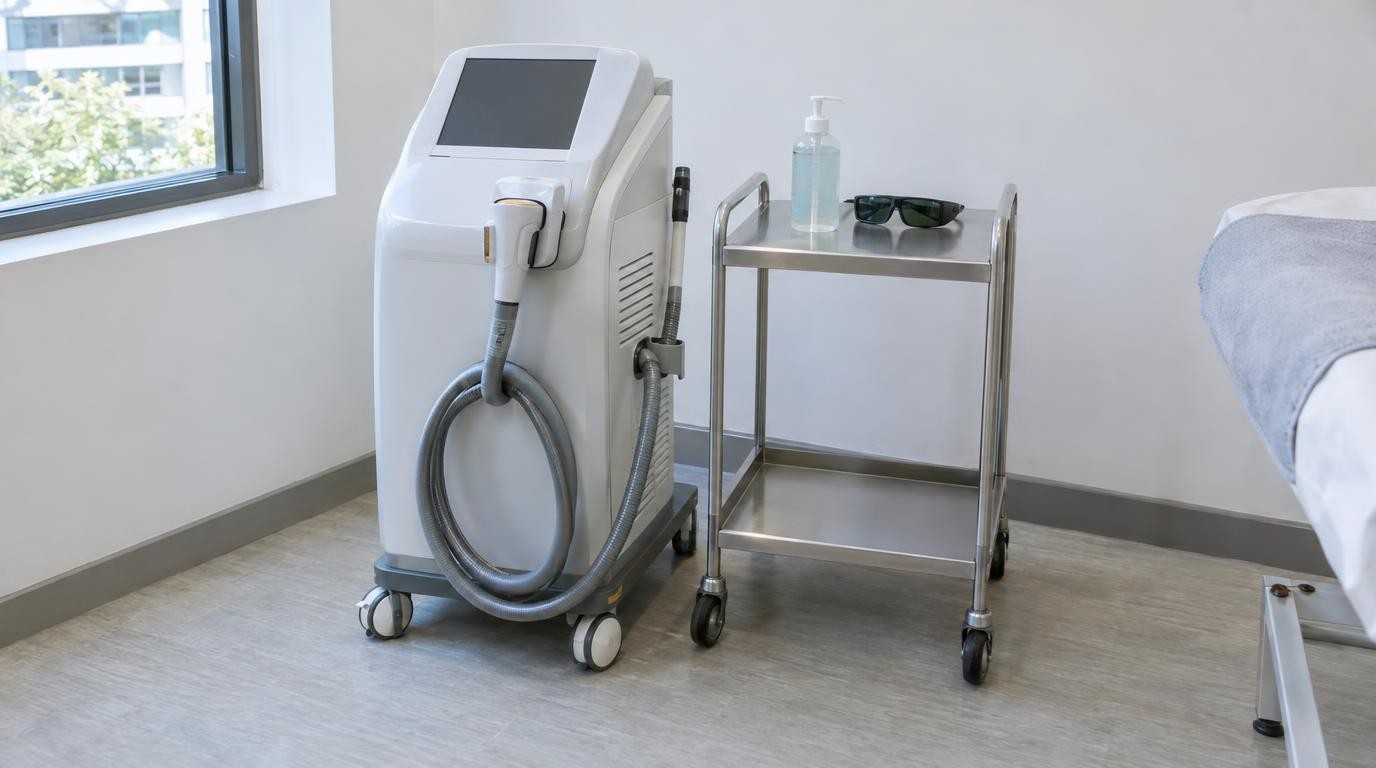
We adjust the settings for your skin and concerns. If the pulses are uncomfortable, tell us so we can adjust the settings or pacing.
How Many IPL Sessions Might You Need?
At La Belle Vie MedSpa, a full-face IPL treatment typically takes 20 to 30 minutes. Our usual plan is three to five sessions spaced three to four weeks apart, adjusted according to the extent of sun damage and how your skin responds. A series allows improvement to build rather than treating a single visit as a guarantee of clearance.
How Long Does IPL Recovery Take, and When Will Spots Fade?
Many patients return to normal activities the same day after IPL. Mild redness or swelling may last from a few hours to a few days, while treated spots often darken for a week or two before flaking away. Some improvement may be visible shortly after treatment, with clearer skin becoming more noticeable over the following weeks; the best result generally follows the recommended series. Gentle skin care and sun protection help the skin recover and preserve the result.
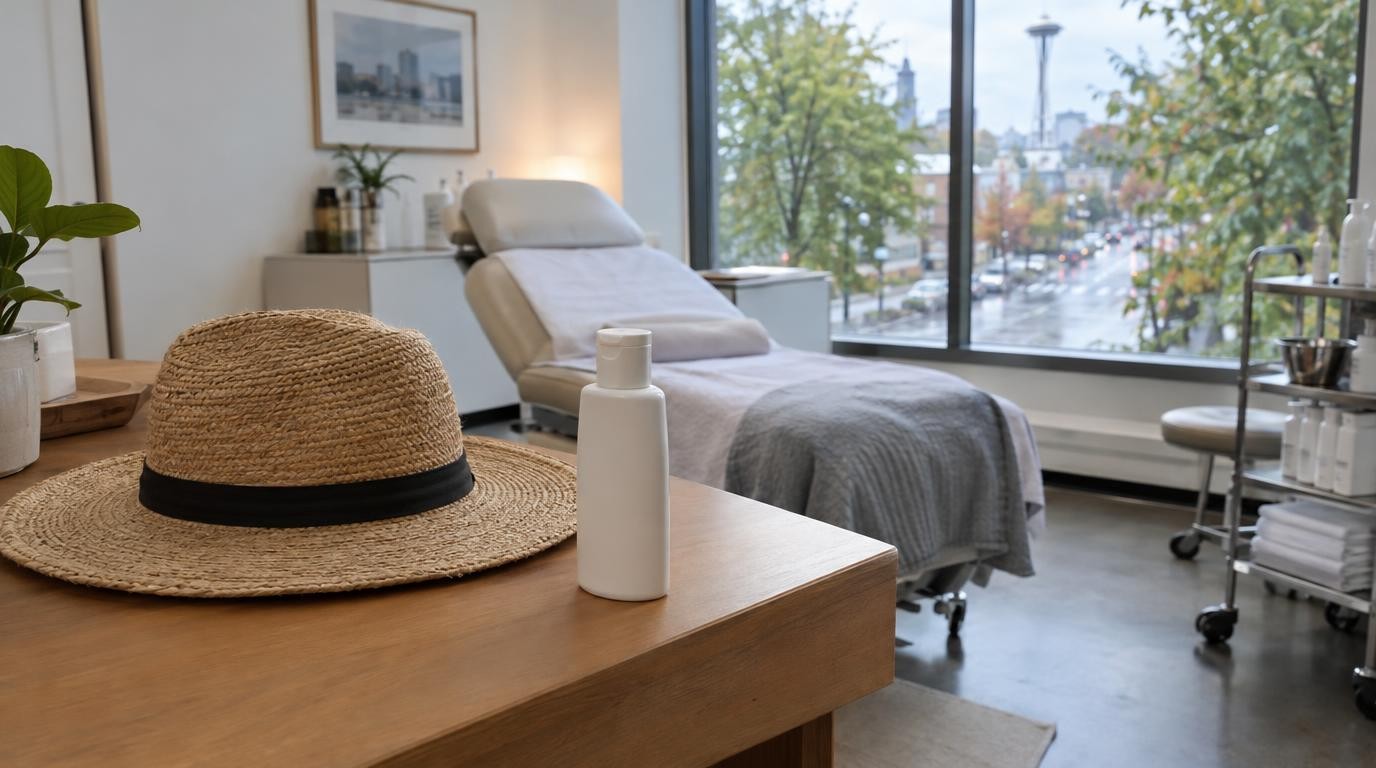
Use a gentle cleanser, and avoid picking or scrubbing darkened spots while they flake away.
How Do You Keep Age Spots From Returning?
Use broad-spectrum sunscreen every day, along with shade and protective clothing when you are outdoors. At La Belle Vie MedSpa, results from a completed IPL series may last months to years with appropriate sun protection, but new ultraviolet exposure can produce new spots. Maintenance is a separate decision based on how your skin changes.
What Are IPL’s Risks, and Who Should Not Have It?
IPL commonly causes temporary redness, swelling, and darkening of treated spots. Less common risks include burns, blisters, and lighter or darker pigment changes. Pregnancy, an active skin infection, a recent tan, photosensitizing medication, melasma, or darker skin may make IPL inappropriate or require an alternative. A qualified clinician should review these factors before treatment.
At La Belle Vie MedSpa, we ask patients to disclose their full medication and skin-treatment history, including topical retinoids, acne treatments, and recent isotretinoin use. Do not stop a prescribed treatment on your own; discuss with your own clinician whether anything should be paused or whether IPL should be avoided. A recent sunburn or self-tanner also matters because altered skin pigmentation can affect treatment safety.
Seek prompt medical attention for a severe burn, extensive blistering, severe or increasing pain, or signs of infection after treatment. Temporary spot darkening is expected, but a reaction that is worsening rather than settling needs assessment.
Frequently Asked Questions
How should I prepare for an IPL photofacial for age spots?
Avoid tanning, sunburn, and self-tanner for several weeks before your appointment. At La Belle Vie MedSpa, we ask you to arrive with clean skin free of makeup and bring a medication list, especially if you take photosensitizing drugs. Ask us ahead of time whether to pause any retinoids or acne treatments.
What SPF sunscreen should I use to prevent age spots from coming back?
Use a broad-spectrum, water-resistant sunscreen with SPF 30 or higher on skin not covered by clothing, as recommended by the American Academy of Dermatology. Apply it before going outside, and pair it with shade and protective clothing. Sun protection matters even after spots fade because new ultraviolet exposure can cause more pigmentation.
Is a chemical peel or freezing better for age spots on the hands?
Neither is automatically better for every hand spot. In a study cited by the American Academy of Dermatology, 47% of patients who received a chemical peel had 50% fading of their hand age spots. Cryosurgery produced slightly better fading, but skin tended to heal faster after a peel. A dermatologist can help you weigh those trade-offs for your spots.
Is there a prescription cream specifically studied for age spots?
Yes. A 2025 systematic review identified mequinol 2% combined with tretinoin 0.01% as the most commonly effective topical treatment studied, with reported efficacy ranging from 52.6% to over 80%, particularly for facial lesions. Those trial results do not predict your outcome; a clinician can determine whether the prescription is appropriate for your skin.
Is BBL the same kind of treatment as an IPL photofacial?
Yes. BBL, or broadband light, is a name used for a type of broad-wavelength IPL treatment, as is photofacial. According to the American Board of Cosmetic Surgery, platforms vary, but provider skill matters more than the brand name. The appropriate device and settings depend on the diagnosed spots and your skin tone, not the treatment’s name.
Will an IPL photofacial remove wrinkles while treating age spots?
IPL may modestly improve fine lines and skin texture, but it is primarily used to address pigmentation and redness. At La Belle Vie MedSpa, we do not present it as a treatment that removes deeper wrinkles. Deeper wrinkles usually respond better to other treatments, such as laser resurfacing.
Can microdermabrasion help fade age spots?
It may help. The American Academy of Dermatology describes dermatologist-performed microdermabrasion as a way to smooth away age spots and notes studies showing it can be quite effective, especially alongside a chemical peel.
What Is Your Next Step for Age Spots in Seattle?
The next step is to establish what the spots are before choosing how to fade them. Have uncertain, new, or changing marks medically evaluated; then compare topical care, IPL, and other suitable procedures based on your skin type, diagnosis, and recovery preferences. Consistent sun protection remains part of every option.
If your spots have been confirmed as benign and you are considering age spot removal, contact La Belle Vie MedSpa in Seattle, Washington, for a personalized consultation. Our team can discuss whether IPL fits your skin and goals or whether a topical approach or another procedure makes more sense.
This information is general and is not medical advice. Talk to a licensed clinician about your own situation before making a treatment decision.
