

Last updated: August 31, 2026
This evidence-based advancement offers Seattle-area residents seeking advanced skin treatments a scientifically validated option for addressing signs of aging, sun damage, and skin texture concerns. Learn more about microneedling in Seattle at La Belle Vie MedSpa.
What Is Microneedling and How Does It Work?
Collagen induction therapy, also known as microneedling, uses specialized devices equipped with fine micro-needles to create controlled, microscopic perforations in the skin. These micro-injuries trigger the skin’s natural healing response, stimulating collagen and elastin production without causing significant damage to the outer layer. Radiofrequency needling (RF needling) adds a layer of sophistication by delivering radiofrequency energy through the needles, heating the deeper dermal layers to further encourage tissue remodeling and skin tightening.
What Skin Concerns Can Microneedling Address?
The needling treatment effectively targets a range of common skin concerns including fine lines, wrinkles, facial acne scars, uneven skin texture, large pores, and sun damage. The treatment promotes cellular turnover and collagen synthesis, making it suitable for improving overall skin quality on the face and body. Patients with melasma, hyperpigmentation, and abdominal stretch marks may also benefit from this versatile approach to skin rejuvenation.
Why Has Microneedling Become a Preferred Treatment Choice?
The needling procedure offers a minimally invasive alternative to surgical procedures, requiring little to no downtime while delivering meaningful results. The treatment works with the skin’s natural regenerative processes rather than relying on external solutions, making it a compelling option for those seeking natural-looking improvements. Modern RF needling devices like Morpheus8 combine proven needling technology with radiofrequency energy to address skin laxity alongside texture concerns.
What New Evidence Supports Adding PDGF to Microneedling?
Researchers evaluated participants aged 30 to 60 years using standardized aesthetic assessment tools and patient-reported outcome measures at 7 and 30 days post-procedure.

What Did the Randomized Controlled Trial Measure?
The study employed board-certified dermatologists to determine Clinical Global Aesthetic Improvement Scores (CGAIS) and used Canfield Image Analysis software to assess seven objective aesthetic parameters. Participants who received pure PDGF treatment showed greater improvement in CGAIS at both evaluation points compared to the standard-of-care group. PDGF treatment outperformed standard care in six of seven image analysis outcomes, with participants reporting an overall better treatment experience.
How Does PDGF Work With Microneedling?
PDGF is a potent stimulator of tissue regeneration that has received FDA approval for four medical therapeutic indications involving tissue healing. When applied topically following the micro-channels created by microneedling, PDGF penetrates deeper into the skin where it can stimulate cellular proliferation, angiogenesis, and collagen synthesis. This synergistic approach amplifies the benefits of both treatments, accelerating and enhancing the skin’s regenerative response.
Why Is PDGF a Game-Changer for Skin Rejuvenation?
Growth factors like PDGF represent a paradigm shift in aesthetic medicine by working with the body’s intrinsic healing mechanisms rather than relying solely on external stimulation.
What Makes Growth Factors Effective for Aesthetic Treatments?
Growth factors are signaling proteins that direct cellular behavior, promoting processes essential for tissue repair and regeneration. PDGF specifically stimulates fibroblast activity, increases collagen and elastin production, and supports the formation of new blood vessels to nourish healing tissue. When delivered effectively to the dermis through microneedling-created channels, growth factors can maximize the skin’s regenerative potential.
How Does Combining PDGF With RF Microneedling Compare to Standard Protocols?
Standard needling aftercare typically involves occlusive ointments like petroleum jelly to support healing. The clinical trial showed that replacing standard of care with pure PDGF application led to measurably better aesthetic results and higher patient satisfaction scores. This evidence-based enhancement allows providers to differentiate their offerings while giving patients access to scientifically validated treatment improvements.
What Aesthetic Concerns Can Enhanced Microneedling Treat?
PDGF-enhanced needling addresses a comprehensive range of skin concerns affecting both facial and body areas. The treatment’s versatility makes it suitable for patients presenting with multiple concerns who want a comprehensive approach to skin rejuvenation without undergoing multiple separate procedures.
Can PDGF-Enhanced Needling Help With Sagging Skin?
RF needling with PDGF enhancement targets skin laxity by stimulating collagen and elastin production in the deeper dermal layers. The radiofrequency energy heats tissues to promote tightening, while PDGF accelerates the healing and remodeling process. This combination approach helps improve sagging on the face, neck, and body areas where skin laxity becomes noticeable over time.
How Does This Approach Address Sun Damage and Dark Spots?
Sun damage manifests as hyperpigmentation, uneven skin tone, rough texture, and the appearance of dark spots. The enhanced healing response from PDGF application helps skin cells turnover more efficiently, fading discoloration and improving overall skin clarity. Patients seeking laser treatment for sun damaged skin alternatives may find that PDGF-enhanced microneedling offers comparable resurfacing benefits with a different mechanism of action.
What Should You Expect During a Microneedling Session?
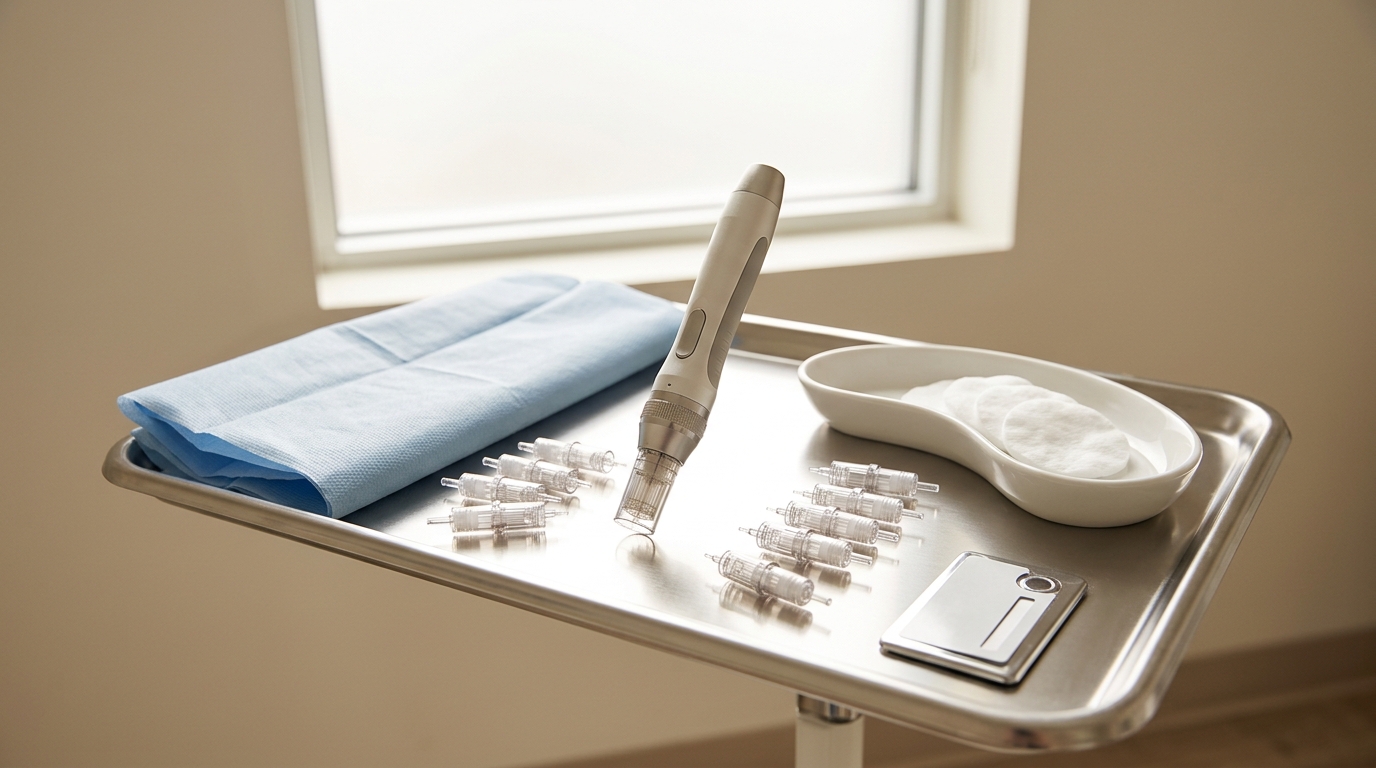
Understanding the treatment experience helps patients prepare appropriately and set realistic expectations. PDGF-enhanced RF needling follows a similar process to conventional microneedling with the addition of growth factor application immediately following the needling portion of the treatment.
How Long Does a Typical Treatment Take?
A complete RF needling session typically ranges from 30 to 60 minutes depending on the treatment area size. The procedure begins with cleansing and application of topical anesthetic to ensure comfort throughout treatment. After the needling with RF energy is completed, pure PDGF is applied topically to maximize the regenerative response before finishing with a soothing serum and sunscreen.
What Does Recovery From Microneedling Involve?
Patients can expect mild redness and sensitivity similar to a sunburn for the first 24 to 48 hours following treatment. The skin enters a healing phase where it may feel slightly tight or dry. Most patients resume normal activities within a day or two, though direct sun exposure should be avoided and broad-spectrum sunscreen applied consistently. Results develop gradually as collagen remodeling occurs over several weeks.
Risks, Side Effects and Who Is Not a Candidate
PDGF-enhanced microneedling is generally well-tolerated with a favorable safety profile in clinical trial settings. Common side effects include temporary redness, swelling, pinpoint bleeding, and mild skin sensitivity at the treatment site. These effects typically resolve within several days as the skin heals naturally.
Certain individuals should avoid needling treatments. Those with active skin infections, open wounds, or inflammatory skin conditions in the treatment area should postpone the procedure until healing is complete. Patients with bleeding disorders, autoimmune conditions affecting wound healing, or who are immunocompromised should discuss their medical history thoroughly with a qualified provider. Individuals who are pregnant or breastfeeding should defer cosmetic needling treatments. The FDA regulates needling devices, and treatments should only be performed by trained practitioners using cleared devices in appropriate clinical settings.
Ready to Explore PDGF-Enhanced Microneedling?
La Belle Vie MedSpa offers personalized skin rejuvenation consultations to help you determine whether PDGF-enhanced microneedling aligns with your aesthetic goals. Our team evaluates your skin concerns, medical history, and treatment objectives to recommend appropriate options. Whether you’re addressing wrinkles near Seattle, seeking to improve skin texture in Bellevue, or exploring treatments for sun damage in Kirkland, we provide expert guidance tailored to your needs. Contact La Belle Vie MedSpa to schedule your consultation and learn more about evidence-based approaches to skin rejuvenation.
Frequently Asked Questions
What is PDGF and how does it enhance microneedling results?
PDGF (platelet-derived growth factor) is an FDA-approved signaling protein that stimulates tissue regeneration. When applied topically after microneedling creates micro-channels in the skin, PDGF penetrates deeper layers where it stimulates cellular proliferation, angiogenesis, and collagen synthesis. This synergistic approach amplifies the benefits of both treatments, accelerating the skin’s regenerative response for superior aesthetic outcomes.
How long does a PDGF-enhanced microneedling treatment take?
A complete PDGF-enhanced RF microneedling session typically ranges from 30 to 60 minutes depending on the treatment area size. The procedure includes cleansing, topical anesthetic application, microneedling with RF energy delivery, followed by pure PDGF application, and finishing with a soothing serum and sunscreen.
What skin concerns can PDGF-enhanced microneedling address?
PDGF-enhanced needling effectively targets fine lines, wrinkles, facial acne scars, uneven skin texture, large pores, sun damage, hyperpigmentation, melasma, stretch marks, and skin laxity. The treatment promotes cellular turnover and collagen synthesis, making it suitable for improving overall skin quality on both facial and body areas.
What is the recovery time after microneedling?
Patients can expect mild redness and sensitivity similar to a sunburn for the first 24 to 48 hours following treatment. The skin may feel slightly tight or dry during healing. Most patients resume normal activities within a day or two, though direct sun exposure should be avoided and broad-spectrum sunscreen applied consistently.
Who should avoid microneedling treatments?
Individuals with active skin infections, open wounds, or inflammatory skin conditions in the treatment area should postpone the procedure. Patients with bleeding disorders, autoimmune conditions affecting wound healing, or who are immunocompromised should discuss their medical history with a qualified provider. Pregnant or breastfeeding individuals should defer cosmetic microneedling treatments.
How does PDGF-enhanced microneedling compare to standard microneedling?
The randomized controlled trial showed PDGF treatment outperformed standard care in six of seven image analysis outcomes, with participants reporting greater improvement in Clinical Global Aesthetic Improvement Scores at both 7 and 30 days post-procedure.
When will I see results from microneedling?
Results develop gradually as collagen remodeling occurs over several weeks following treatment. The clinical trial showed greater improvement in aesthetic outcomes at both 7 and 30-day evaluation points compared to standard microneedling protocols. Patients reported an overall better treatment experience with measurably better aesthetic results and higher satisfaction scores.
Related reading
- Why Seattle’s Late Summer Is Prime Time for VI Peel Treatments
- Morpheus8 combines radiofrequency technology with microneedling to treat
Sources
- Recombinant Pure PDGF Improves Aesthetic Results and Patient Satisfaction Following RF Microneedling: A Prospective, Randomized, Controlled Clinical Trial
- Microneedling Devices | FDA
This article is general information and is not medical advice. Talk to a licensed clinician about your own situation before making a treatment decision.
