

Last updated: November 24, 2026
Is Zepbound the same as Mounjaro? Yes and no: both Eli Lilly brands contain tirzepatide, but they have different FDA-approved uses and separate prescribing information. If you are comparing them for weight management, the distinction affects which prescription fits your diagnosis and why switching brands requires a review of your treatment plan.
Is Zepbound the Same as Mounjaro?
Zepbound and Mounjaro contain the same active ingredient, tirzepatide, but they are not automatically interchangeable prescriptions. Both are injected under the skin once weekly. The FDA approved Zepbound for chronic weight management after Mounjaro was approved for type 2 diabetes, and each brand has its own labeled uses and product instructions.
The FDA’s Zepbound approval announcement identifies tirzepatide as the active ingredient in both brands and distinguishes their approved uses. For Seattle-area patients exploring medically supervised tirzepatide weight-loss treatment, the useful question is not only whether the molecule matches. It is whether the prescribed product, indication and treatment plan match your needs.
What Are Zepbound and Mounjaro Approved to Treat?
Zepbound and Mounjaro have distinct FDA-approved uses, even though both contain tirzepatide. An approved use for one brand does not automatically apply to the other.
| Consideration | Zepbound | Mounjaro |
|---|---|---|
| FDA-approved uses | Chronic weight management in eligible adults; moderate-to-severe obstructive sleep apnea in adults with obesity | Improved blood sugar control in adults with type 2 diabetes |
| Used alongside | Reduced-calorie nutrition and increased physical activity for weight management | Diet and exercise for type 2 diabetes |
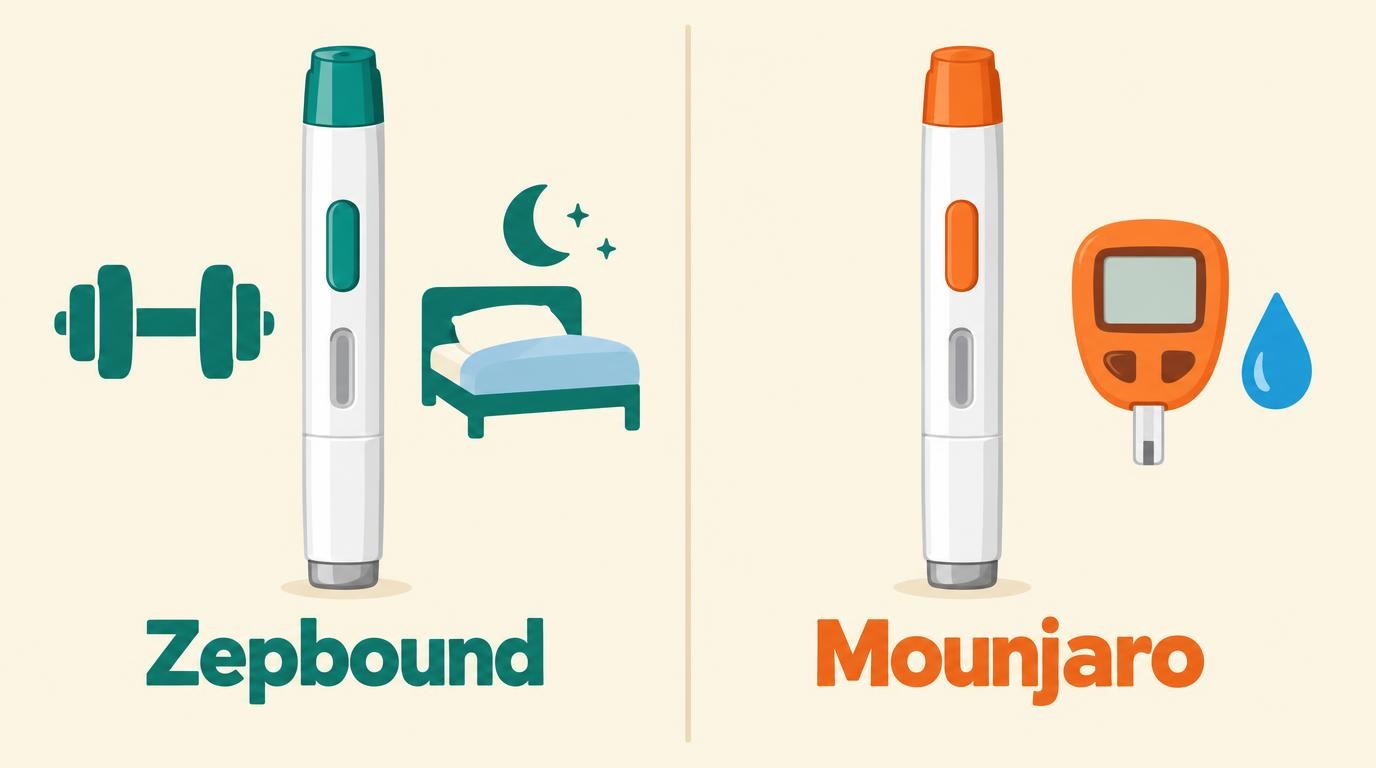
The FDA’s Zepbound prescribing information includes the sleep apnea indication. The FDA’s comparison of approved tirzepatide products identifies Mounjaro’s type 2 diabetes indication and Zepbound’s weight-management indication. For more on the sleep apnea use, see our tirzepatide sleep apnea guide.
Can Mounjaro Be Prescribed for Weight Loss?
A clinician may consider Mounjaro for weight loss when medically appropriate, but weight loss is an off-label use of Mounjaro. Your diagnosis and health history guide the prescribing decision, and insurance coverage may differ by brand.
How Does Zepbound Affect Appetite?
Zepbound’s tirzepatide activates GIP and GLP-1 receptors involved in appetite and food intake. Tirzepatide also affects digestion and blood sugar response, which helps explain why reduced hunger or earlier fullness may make portion control easier. Mounjaro contains the same active ingredient, so the same pathways are relevant under either brand; neither brand guarantees a particular result.
The FDA’s description of tirzepatide’s mechanism explains that both receptors are found in areas of the brain involved in appetite regulation and that tirzepatide delays gastric emptying. Medication remains one part of weight management alongside nutrition and physical activity. Our guide to whether Zepbound is a GLP-1 medication explains the dual-receptor action in more detail.
Are the Doses of Zepbound and Mounjaro the Same?
The FDA’s comparison of approved tirzepatide products lists the same six once-weekly dose strengths for Zepbound and Mounjaro: 2.5, 5, 7.5, 10, 12.5 and 15 mg. Both use a gradual dose-escalation approach, but their labeled maintenance recommendations depend on what is being treated. Pens and vials also have product-specific instructions. A matching dose does not authorize switching brands or using instructions for a different product presentation.
The FDA’s clinical review of Zepbound describes a starting dose of 2.5 mg weekly for 4 weeks, followed by 5 mg weekly, with later increases in 2.5 mg steps after at least 4 weeks at a dose and a maximum of 15 mg weekly. The review notes that the same dose-escalation schedule was approved for Mounjaro’s type 2 diabetes use. These are label-based descriptions, not instructions to change your own dose.
For weight management, Zepbound’s recommended maintenance doses are 5, 10 or 15 mg once weekly. The FDA’s Zepbound label separately lists 10 or 15 mg weekly for obstructive sleep apnea. For type 2 diabetes, Mounjaro’s prescribing information recommends 5 mg weekly as the first maintenance dose; if additional blood sugar control is needed, the dose may increase in 2.5 mg steps after at least four weeks at the current dose, up to 15 mg weekly. Both brands have different presentations, including pens and vials. Follow the instructions for the specific product you receive, and do not change your dose without your prescriber.
Can You Switch From Mounjaro to Zepbound Without Changing Your Plan?
Not necessarily. Before switching from Mounjaro to Zepbound, the prescriber needs to review your diagnosis, current dose, injection timing, response, side effects and the particular product being prescribed. A switch should not be treated as a chance to restart, skip or increase a dose without that review.
Can You Take Zepbound and Mounjaro Together?
No. Taking both brands would duplicate tirzepatide. The FDA’s Zepbound prescribing information also says not to use it with another tirzepatide-containing product or any GLP-1 receptor agonist, including semaglutide. Do not add semaglutide or another such medication to Zepbound on your own; discuss any change with your prescriber.
Who Might Be a Candidate for Tirzepatide Weight Management?
Adults may meet Zepbound’s weight-management criteria if they have a body mass index, or BMI, of at least 30, or a BMI of at least 27 with a weight-related condition. Meeting a BMI threshold does not establish that tirzepatide is appropriate. Medical history, medications, possible lab results and treatment goals all matter.
At La Belle Vie MedSpa, we also consider prior weight-loss efforts and whether a medically supervised plan fits your health needs.
What Happens in Our Medically Supervised Tirzepatide Program Near Seattle?
At La Belle Vie MedSpa in Tukwila, near Seattle, Washington, our medically supervised tirzepatide program follows these steps:
- Consultation: We review your health history, medications, previous weight-loss efforts, current habits and goals.
- Evaluation: Lab work may be recommended to assess blood sugar and other metabolic concerns.
- Treatment plan: If tirzepatide is appropriate, we discuss weekly injections, nutrition and activity guidance, and dose adjustments based on your response and tolerance.
- Follow-up: Regular check-ins track your progress, side effects and nutrition patterns.
Dr. Tony Mangubat, MD, oversees our program with our wellness team. A consultation does not imply that we dispense either named brand.
What Is a Weekly Tirzepatide Treatment Routine Like?
Tirzepatide is typically injected once weekly. A routine also includes following the instructions for the prescribed presentation, keeping track of appetite and side effects, and bringing those observations to check-ins. Our team uses those visits to assess weight trends, nutrition patterns and whether a gradual dose adjustment is appropriate. For product-specific technique, see our Zepbound injection-site guide.
How Much Weight Can You Lose on Zepbound in 3 Months?
There is no dependable amount of weight loss that every person can expect from Zepbound in 3 months. Some people notice appetite changes in the first few weeks, while weight loss often develops gradually. Published outcomes measured over longer treatment periods cannot predict an individual’s early result, especially while the dose and habits are still being adjusted.
The Endocrine Society’s summary of the phase 3 SURMOUNT-1 trial reports that, among adults with obesity or overweight and a weight-related condition who did not have diabetes, participants receiving 5 mg of Zepbound lost an average of 34 lb at 72 weeks and those receiving 15 mg lost 48 lb, versus 7 lb with placebo; the average starting weight was 231 lb. These are 72-week group averages, not a prediction for your first three months.
The official Zepbound drug information describes a randomized-withdrawal study in which participants switched to placebo after 36 weeks of tirzepatide regained weight on average by week 88, while those who continued tirzepatide lost additional weight. Maintaining weight loss may require ongoing treatment, so we discuss a long-term plan rather than assuming the benefit will persist after medication stops.
What Are the Risks, Side Effects and Reasons to Avoid Tirzepatide?
Tirzepatide commonly causes gastrointestinal side effects, including nausea, diarrhea, vomiting and constipation. In pooled 72-week weight-management trials in adults, the FDA’s Zepbound prescribing information reports nausea in 25%–29%, diarrhea in 19%–23%, vomiting in 8%–13% and constipation in 11%–17% of participants taking Zepbound across the studied doses, versus 8%, 8%, 2% and 5%, respectively, with placebo. Separate from these common side effects, Zepbound and Mounjaro carry a boxed warning about thyroid C-cell tumors seen in rodents; whether the finding applies to humans is unknown. Neither is appropriate for someone with a personal or family history of medullary thyroid carcinoma or multiple endocrine neoplasia syndrome type 2.
Less common but serious risks include pancreatitis, gallbladder problems and acute kidney injury; vomiting or diarrhea can cause dehydration that increases the risk of kidney injury. The FDA’s Zepbound approval announcement notes that Zepbound has not been studied in people with a history of pancreatitis. Tell us if you have had pancreatitis so we can review whether treatment is appropriate; that history is not an automatic contraindication. Tirzepatide is not recommended for people with severe gastroparesis, and a prior serious allergic reaction to tirzepatide or a product ingredient is a contraindication. Insulin or a sulfonylurea increases the risk of low blood sugar when used with tirzepatide. Worsening diabetic retinopathy is another warning for people with type 2 diabetes. Discuss your medical history, other medicines and these risks with your own clinician before treatment.
Which Symptoms Should Prompt a Call to Your Prescriber?
Contact your prescriber for persistent nausea, vomiting or diarrhea. Seek urgent medical care for severe or persistent abdominal pain, inability to keep fluids down, or signs of a severe allergic reaction, such as trouble breathing or swelling of the face or throat. Do not try to manage a suspected serious reaction by changing your dose yourself.
How Does Tirzepatide Compare With Semaglutide for Weight Management?
Tirzepatide activates both GIP and GLP-1 receptors, while semaglutide acts at GLP-1 receptors. That difference offers another treatment option, not a rule that one medicine is best for everyone. Medical history, treatment goals, response and tolerability help determine which approach may fit an individual weight-management plan.
La Belle Vie MedSpa offers both tirzepatide and semaglutide within its medical weight-loss services. If you are weighing the options, our semaglutide and tirzepatide comparison explores the differences without assuming that receptor activity alone predicts your result.
Frequently Asked Questions
Does oral tirzepatide work for weight loss?
There is no FDA-approved oral tirzepatide product. Zepbound and Mounjaro are injections given under the skin; evidence for those approved formulations does not establish the safety or effectiveness of an oral product marketed as tirzepatide.
What should I do if I miss a Zepbound or Mounjaro dose?
Take the missed dose within four days of the scheduled injection; if more than four days have passed, skip it and take your next dose on your usual day. This timing is set out in Zepbound’s prescribing information. Do not take two doses to make up for one missed injection.
Can Zepbound or Mounjaro make birth control pills less effective?
Yes, tirzepatide can reduce the effectiveness of oral hormonal contraceptives by delaying stomach emptying. Zepbound’s prescribing information advises switching to a nonoral method or adding a barrier method for four weeks after starting treatment and four weeks after each dose increase. Nonoral hormonal contraceptives are not expected to be affected in the same way.
Should I tell my surgical team that I take Zepbound or Mounjaro?
Yes. Tell your surgical and anesthesia teams that you take tirzepatide before a procedure involving general anesthesia or deep sedation. Zepbound’s prescribing information warns that delayed stomach emptying may increase the risk of stomach contents entering the lungs. The label does not establish whether temporarily stopping Zepbound or changing fasting instructions reduces that risk.
What if I become pregnant while taking Zepbound?
Stop Zepbound when pregnancy is recognized and contact your prescriber. Zepbound’s prescribing information says weight loss offers no benefit during pregnancy and may harm a fetus. If you use Mounjaro for diabetes, do not stop blood sugar treatment without a plan to keep your glucose controlled.
Can I use tirzepatide after bariatric surgery?
Possibly, but prior bariatric surgery calls for an individualized medical review. A systematic review of tirzepatide after bariatric surgery reported mean total-body-weight losses ranging from 12.0% to 18.1% at the last available follow-up, 6–12 months, across five observational studies. The evidence remains limited and heterogeneous.
What Should You Ask Before Choosing or Switching Tirzepatide Brands?
Before choosing or switching tirzepatide brands, confirm the approved use that fits your diagnosis, the exact prescription and current dose, previous side effects, product identity and insurance coverage. Zepbound and Mounjaro share an active ingredient, but a brand change is still a prescribing decision. Clear answers make the next step safer and more personal.
- Indication: Which diagnosis is the prescription intended to address, and is that use on the brand’s label?
- Plan: What dose and injection schedule are currently prescribed, and what changes, if any, are planned?
- Tolerability: Which side effects or medication interactions need review before a change?
- Product: Which brand and presentation will you receive, and which instructions apply?
- Coverage: Does your insurance plan cover the prescribed brand for your diagnosis?
If you are considering tirzepatide weight loss in Seattle, Washington, contact La Belle Vie MedSpa for a consultation. Dr. Tony Mangubat, MD, and our team can review your health history, goals and treatment options with you and discuss what a medically supervised plan would involve.
This information is general and is not medical advice. Talk to a licensed clinician about your own situation before making a treatment decision.
About the doctors at La Belle Vie MedSpa
Dr. Tony Mangubat, MD – Board-certified cosmetic surgeon, chief surgeon and medical director since 1987.
Dr. Lena Weinman – Cosmetic surgeon (cosmetic surgery fellowship with Dr. Mangubat, 2024); board-certified by the American Osteopathic Board of Obstetrics and Gynecology.
