

Last updated: August 22, 2026
Peptide-based skincare has moved from clinical curiosity to mainstream beauty conversation, with major publications including Allure highlighting how these amino acid chains support skin health at the cellular level. For patients in Seattle and surrounding areas seeking to maximize their Restylane filler results, peptide serums represent an evidence-backed complement to in-office treatments. This approach – combining professional injectable treatments with targeted at-home skincare – reflects a growing trend toward comprehensive anti-aging strategies that extend results between appointments. Learn more about Restylane® filler treatment in Seattle at La Belle Vie MedSpa.
What Is Restylane and What Areas Does It Treat?
Restylane is a family of hyaluronic acid dermal fillers approved by the FDA for soft tissue augmentation across multiple facial areas. These fillers use a stabilized form of HA – a substance naturally found in skin that attracts and retains moisture – to restore volume, smooth wrinkles, and enhance facial contours.
Which Restylane Formulation Targets Specific Concerns?
Different Restylane products are formulated for specific treatment areas and aesthetic goals. Restylane Kysse addresses lip enhancement and lip lines with a flexible gel designed for natural movement. Restylane Lyft targets cheek augmentation and midface volume loss, providing lift and definition. Restylane Refyne softens moderate facial wrinkles and folds while maintaining natural facial expressions. Restylane Defyne supports deeper lines and facial contouring with a robust formulation. Patients seeking under-eye restoration can explore Restylane treatments designed to address hollows and dark circles with precision.
How Does Hyaluronic Acid in Restylane Restore Volume?
Hyaluronic acid fillers work through two mechanisms: immediate volume replacement and gradual hydration improvement. The HA molecules in Restylane bind water molecules, creating plumping effects that smooth wrinkles and restore facial contours. As the filler gradually integrates with surrounding tissues, it supports skin structure while maintaining a natural appearance. The gel formulations vary in particle size and cross-linking density, allowing providers to select products matched to treatment depth and aesthetic goals.
What Are Peptide Serums and How Do They Work?
Peptide serums deliver concentrated amino acid chains directly to skin, where these compounds function as cellular messengers that instruct skin tissue to repair, hydrate, and strengthen. Unlike topical moisturizers that add hydration from outside, peptide signals encourage skin’s own mechanisms to produce collagen and maintain structural integrity. This approach supports long-term skin quality improvement alongside immediate cosmetic results.
How Do Peptides Function as Cellular Messengers for Skin?
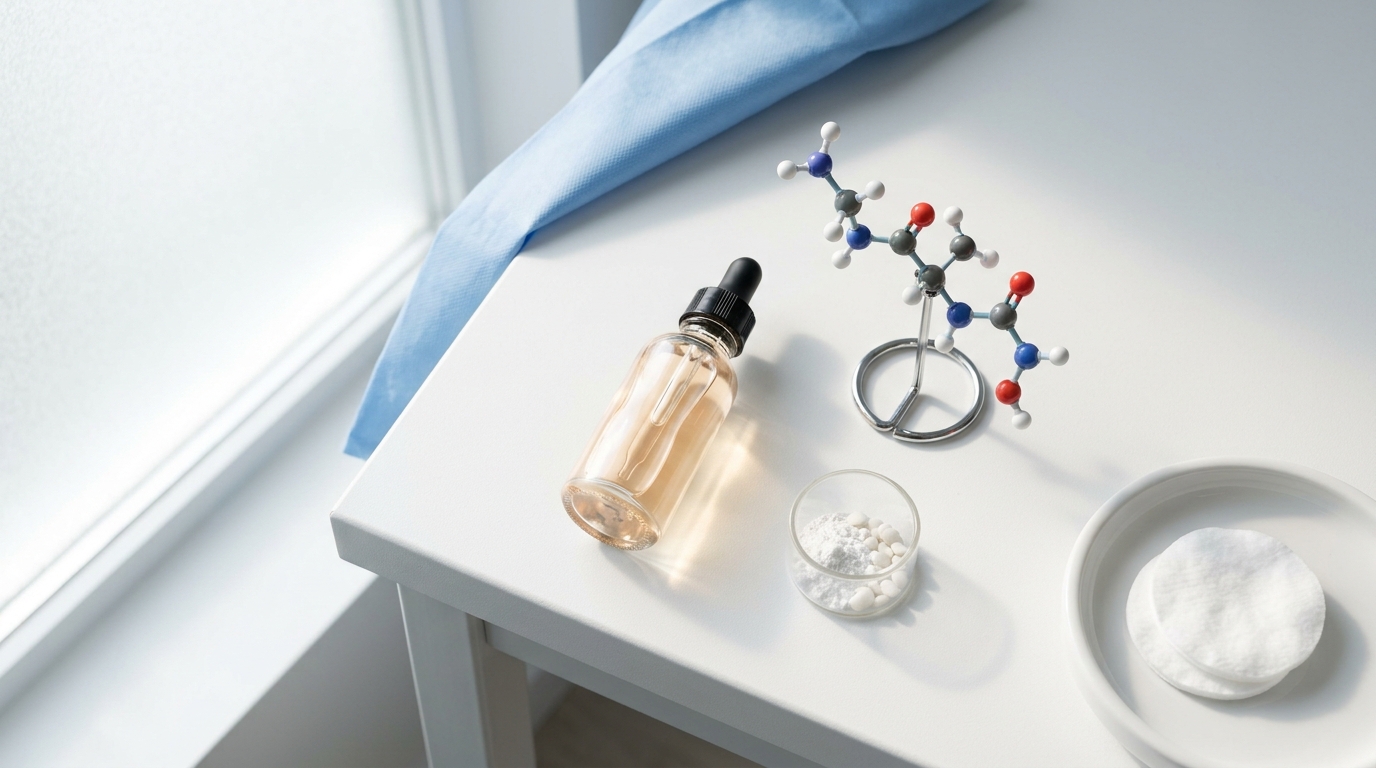
Peptides are short chains of amino acids – the building blocks of proteins including collagen and elastin. When applied topically, these sequences penetrate the skin barrier and bind to cellular receptors, triggering specific biological responses. Signal peptides instruct fibroblasts to increase collagen production. Carrier peptides deliver essential minerals like copper that support enzymatic processes. Neurotransmitter-inhibiting peptides relax facial muscles, complementing treatments like Botox. This multi-pathway approach addresses aging at the cellular level rather than masking symptoms superficially.
What Peptides Are in Medik8’s Liquid Peptides Serum?
Medik8’s Liquid Peptides Serum combines multiple peptide classes in a concentrated formula designed for clinical-grade results. The formula includes Hexapeptide-8, which supports skin firmness and targets expression lines, and Copper Palmitoyl Heptapeptide-14, which aids skin repair processes. Palmitoyl Tripeptide-38 works to reduce the appearance of deep wrinkles by supporting collagen synthesis. The serum combines these peptides with hyaluronic acid for dual-action hydration and cellular signaling. As Allure reported in August 2026, this multi-peptide approach represents the evolution toward science-backed anti-aging formulations that work synergistically with professional treatments.
Why Combine Peptide Topicals with Restylane Treatments?
Combining peptide serums with Restylane treatments creates a complementary approach that addresses both immediate volume restoration and long-term skin quality improvement. Patients using peptide topicals between filler appointments may experience enhanced skin elasticity and support for filler longevity. This integrated strategy treats the underlying skin quality that filler alone cannot fully address.
How Might Peptide Serums Support Filler Outcomes?
Peptide serums support overall skin quality that provides a better foundation for filler results. When surrounding skin has improved elasticity and hydration, filler settles into healthier tissue that maintains structure and appearance. Peptides support collagen production in the dermis, creating a supportive scaffold that helps filler perform optimally. Patients report that their filler results appear more natural and last longer when paired with consistent peptide skincare regimens.
What Does Clinical Evidence Say About Peptides and Skin Quality?
Clinical research on peptides consistently demonstrates improvements in skin elasticity, hydration, and wrinkle reduction. Studies on copper peptides show enhanced wound healing and collagen synthesis. Signal peptides have demonstrated measurable increases in collagen production markers. While individual results vary based on skin condition, age, and product formulation, the evidence base supporting peptide efficacy continues to grow. Major beauty publications including Allure have highlighted peptide formulations as among the most promising developments in evidence-based anti-aging skincare.
What Is the Science Behind Peptide and Filler Synergy?
The synergy between peptide topicals and HA fillers operates through complementary mechanisms that address different aspects of facial aging. While fillers provide immediate structural support and volume, peptides support the skin’s own repair and maintenance processes. Together, these approaches target both the symptoms and underlying causes of volume loss and skin deterioration.
How Do Hyaluronic Acid Fillers and Peptides Work Together?
Hyaluronic acid fillers replace lost volume by physically occupying spaces beneath the skin, providing immediate structural support. Peptides work at the cellular level to improve the quality of skin that surrounds and supports the filler. This combination addresses volume loss while simultaneously supporting skin health. Patients seeking comprehensive facial rejuvenation benefit from this dual approach that treats both immediate cosmetic concerns and long-term skin quality.
What Role Does Collagen Stimulation Play in Results?
Collagen provides the structural foundation that supports healthy, youthful-looking skin. As we age, natural collagen production decreases, contributing to volume loss and skin laxity. Peptides that stimulate collagen synthesis help restore this foundation, creating better conditions for filler longevity and natural-appearing results. Patients with improved collagen support often find their filler treatments require less product to achieve desired outcomes, as the surrounding skin quality provides additional structural support.
How Should You Build a Skincare Routine Around Restylane?
Building an effective skincare routine around Restylane treatments involves strategic timing and ingredient selection that supports both immediate recovery and long-term results. A thoughtful approach to peptide serums and complementary ingredients can extend treatment benefits while improving overall skin quality.
When Should Peptide Serums Be Applied Relative to Filler Treatments?
Peptide serums can typically be reintroduced 24-48 hours after filler treatment, once initial swelling and sensitivity have subsided. During the first week post-treatment, focus on gentle cleansing and hydration before adding active ingredients. After the initial recovery period, apply peptide serums morning and evening as the foundation of your anti-aging routine. Consistent daily use between filler appointments maximizes the cumulative benefits for skin quality and filler support.
What Other Ingredients Complement Restylane Results?
Several ingredients work well alongside peptide serums to support filler results. Hyaluronic acid serums provide additional surface hydration that complements the deeper volume effects of filler. Antioxidants such as vitamin C protect skin from environmental damage that accelerates aging. Sunscreen prevents UV-induced collagen degradation that undermines both skin quality and filler longevity. Retinol can be incorporated gradually for additional anti-aging benefits, typically introduced after the first month post-filler.
What Sets Science-Backed Anti-Aging Topicals Apart?
Science-backed anti-aging topicals distinguish themselves through clinically validated ingredients, appropriate concentrations, and formulation stability that delivers active compounds to their target skin layers. Understanding these differences helps patients make informed choices about which products will genuinely support their treatment results.
Why Are Peptides Becoming Mainstream in Anti-Aging?
Peptides have gained mainstream acceptance as clinical evidence validates their mechanisms and consumer awareness increases. Publications like Allure have featured peptide formulations as among the most promising developments in anti-aging skincare, bringing scientific concepts previously confined to dermatology literature to broader audiences. The shift toward evidence-based beauty reflects consumer sophistication about ingredient science and demand for products that deliver measurable results rather than marketing claims alone.
How Do Clinical Formulations Differ from Basic Skincare?
Clinical formulations typically feature higher concentrations of active ingredients, specialized delivery systems that penetrate the skin barrier, and stability controls that maintain ingredient efficacy through the product’s shelf life. Medical-grade products like Medik8 undergo more rigorous testing than mass-market alternatives. The peptide concentrations, delivery mechanisms, and complementary ingredients in clinical formulations reflect the intersection of pharmaceutical science and cosmetic chemistry, offering results-oriented solutions for patients seeking professional-quality skincare.
Ready to Maximize Your Restylane Results?
Combining professional Restylane treatments with evidence-based peptide skincare represents the comprehensive approach to facial rejuvenation that delivers lasting, natural-appearing results. Patients who invest in both in-office treatments and at-home care often report greater satisfaction with their outcomes and longer intervals between appointments. La Belle Vie MedSpa offers personalized consultations to help you develop a customized treatment plan that incorporates both injectable treatments and science-backed skincare for Bellevue, Seattle, and surrounding communities.
Frequently Asked Questions
What is Restylane and what areas does it treat?
Restylane is an FDA-approved family of hyaluronic acid dermal fillers for soft tissue augmentation. These fillers use stabilized HA to restore volume, smooth wrinkles, and enhance facial contours. Different formulations target specific areas: Restylane Kysse addresses lips, Lyft targets cheeks and midface volume loss, Refyne softens moderate wrinkles while maintaining natural expressions, and Defyne handles deeper lines and contouring.
How do peptide serums work to improve skin quality?
Peptide serums function as cellular messengers that instruct skin tissue to repair, hydrate, and strengthen. These short amino acid chains penetrate the skin barrier and bind to cellular receptors, triggering biological responses. Signal peptides instruct fibroblasts to increase collagen production, while carrier peptides deliver essential minerals like copper that support enzymatic processes and skin repair.
When can I start using peptide serums after Restylane treatment?
Peptide serums can typically be reintroduced 24-48 hours after filler treatment once initial swelling and sensitivity have subsided. During the first week post-treatment, focus on gentle cleansing and hydration before adding active ingredients. After the recovery period, apply peptide serums morning and evening as the foundation of your anti-aging routine.
What types of peptides are found in anti-aging serums?
Anti-aging serums typically contain three main peptide classes. Signal peptides instruct fibroblasts to increase collagen production. Carrier peptides deliver essential minerals like copper that support enzymatic processes. Neurotransmitter-inhibiting peptides relax facial muscles. Medik8’s Liquid Peptides Serum combines Hexapeptide-8 for firmness, Copper Palmitoyl Heptapeptide-14 for repair, and Palmitoyl Tripeptide-38 for deep wrinkle reduction.
Why should I combine peptide topicals with Restylane treatments?
Combining peptide serums with Restylane creates a complementary approach that addresses both immediate volume restoration and long-term skin quality improvement. Peptide topicals enhance skin elasticity and provide a healthier foundation for filler to settle into. When surrounding skin has improved collagen support and hydration, filler results appear more natural and may last longer between appointments.
How do hyaluronic acid fillers and peptides work together?
Hyaluronic acid fillers and peptides address different aspects of facial aging through complementary mechanisms. Fillers provide immediate structural support and volume by physically occupying spaces beneath the skin. Peptides work at the cellular level to improve skin quality surrounding and supporting the filler, encouraging collagen synthesis and skin repair. This dual approach treats both immediate cosmetic concerns and long-term skin health.
What ingredients complement Restylane filler results?
Several ingredients work well alongside peptide serums to support filler results. Hyaluronic acid serums provide additional surface hydration. Antioxidants like vitamin C protect skin from environmental damage that accelerates aging. Sunscreen prevents UV-induced collagen degradation that undermines filler longevity. Retinol can be incorporated gradually after the first month post-filler for additional anti-aging benefits.
